
How to Make a 1 Year Anniversary Card: The Witty Guide
You've found the card aisle, or perhaps you're scrolling through an online catalogue at an unreasonable hour, and every option seems to say the same thing: “Happy Anniversary, I suppose we're still doing this then.” A first anniversary deserves more than a last-minute rectangle with glitter and a vaguely romantic font, but it doesn't require you to become a poet, either.
The clever choice comes before the message. You need to decide whether your partner would value a physical keepsake, a digital greeting, or a combination of both, then choose a design and tone that sound like your relationship rather than a greeting-card committee. Football, music, shared jokes and tiny details will do far more heavy lifting than grand declarations borrowed from the internet.
Table of Contents
- The One-Year Panic and Why This Guide Exists
- Paper Versus Digital Choosing Your Format
- Choosing Your Card Design and Paper
- Picking the Perfect Tone for Your Message
- Writing the Message and Presenting It
- Final Thoughts on Making It Count
The One-Year Panic and Why This Guide Exists
The first anniversary has a peculiar talent for making otherwise sensible adults panic. You can remember the restaurant booking, the present, and possibly even the date, but then a card asks you to summarise an entire year of affection in handwriting that suddenly resembles a nervous spider.
That pressure makes sense. The UK has a well-established card-giving culture, with the Greeting Card Association describing the country as a nation of card senders that sends more cards per person than any other nation. The wider market was valued at £1.7 billion in 2017, including over £1.506 billion in single-card retail sales, according to the Greeting Card Association's UK market facts. An anniversary card isn't some quaint side quest. It sits inside a mainstream habit of marking important moments with something tangible.
Why a generic card falls flat
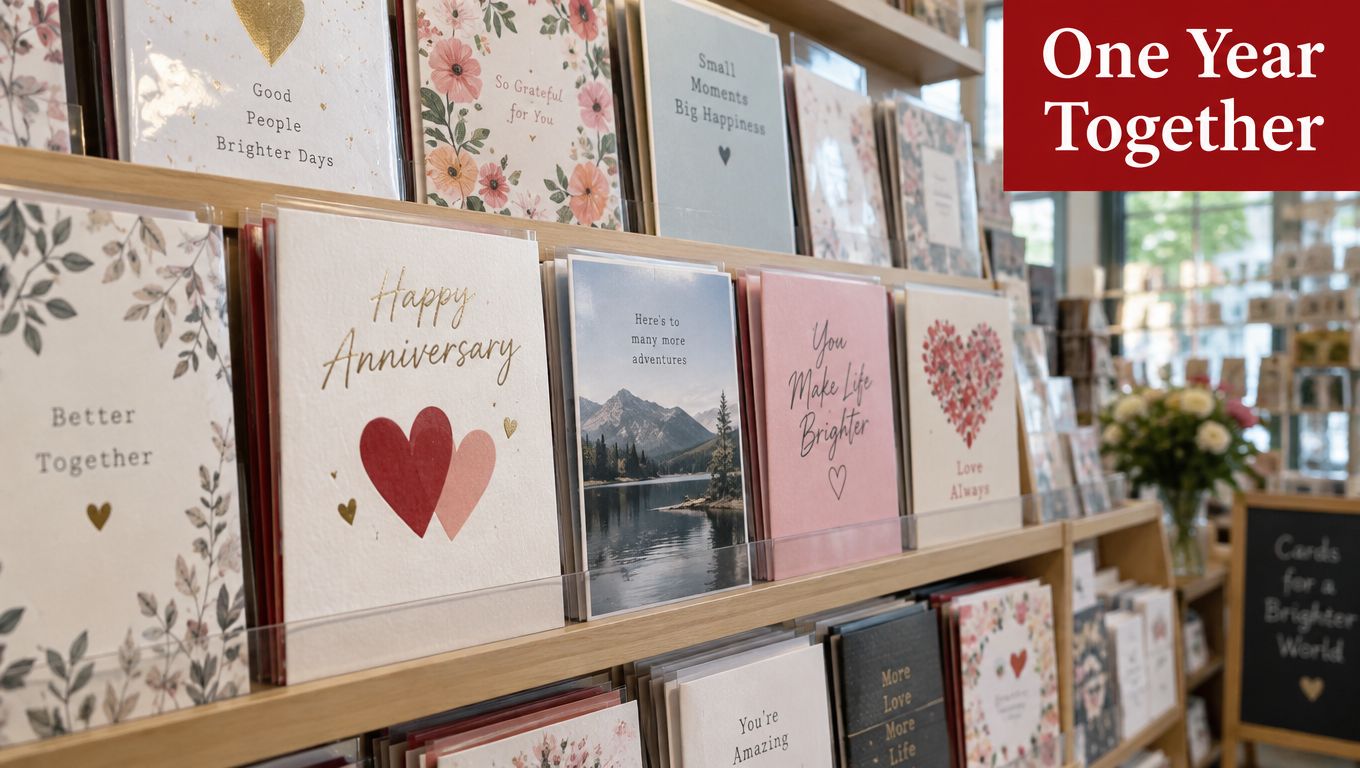
A card that just says “Happy Anniversary” isn't technically wrong. It's just doing the emotional equivalent of turning up to dinner wearing the receipt from last week's takeaway. The recipient may appreciate the gesture, but the card won't tell them why this relationship is yours.
A better 1 year anniversary card should contain at least one recognisable piece of your shared life. That could be the song you played repeatedly during a long drive, the football club you argue about with suspicious seriousness, or the takeaway order you've perfected together. Specificity makes a modest card feel considered.
Practical rule: If the message could be sent to a colleague, a cousin or the neighbour who watered your plants, it needs another detail.
You also don't need to spend extravagantly to make the moment count. The card can carry the sentiment while a small print, favourite meal or handwritten note adds context. The point isn't to stage a romantic blockbuster. It's to show that you noticed the year you've shared and remembered what made it yours.
Paper Versus Digital Choosing Your Format
Before choosing colours, paper or wording, decide how the greeting should arrive. The UK card market remains strongly linked to occasions, with almost nine-tenths of card sales connected to annual events such as anniversaries, birthdays, Christmas, Mother's Day, Father's Day and Valentine's Day, according to Moonpig Group's market overview. That makes an anniversary a high-intent purchase, but the format still depends on the couple.
Digital greetings are no longer an afterthought. One UK trend report records eCard sending among adults rising from 42% in 2023 to 67% in 2025, while mobile sending reached 81% in the same report. Anniversary cards were also identified as the fastest-growing category after birthdays in that source, so ignoring digital because paper feels traditional would be a bit like pretending everyone still listens to music on a MiniDisc.
| Format | Best For | Pros | Cons |
|---|---|---|---|
| Paper | Partners who keep mementoes or value a physical gesture | Tactile, displayable and easy to personalise by hand | Needs planning, delivery and somewhere safe to store |
| Digital | Couples who communicate mainly through their phones | Fast, convenient and easy to send from anywhere | Can feel temporary or disappear among ordinary notifications |
| Both | Couples who like convenience and keepsakes | Immediate message plus a physical reminder | Requires more coordination and can feel excessive if poorly matched |
A printed card usually wins when the occasion is sentimental and the recipient likes keeping meaningful objects. A digital card makes more sense if you're apart, travelling, or hopelessly close to missing the post. Sending both can work when each has a job, such as a morning eCard followed by a paper card at dinner, rather than sending the same message twice and calling it a strategy.
For a useful breakdown of the practical differences, Firacard digital greeting cards offers helpful context on digital and paper formats. If you choose paper, the finish matters more than people expect, so it's sensible to understand different print paper types before ordering.
Make the format fit the relationship
Ask three simple questions. Does your partner save cards? Do they enjoy receiving messages on their phone? Will the card arrive in time without requiring a heroic sprint to the sorting office?
The answer doesn't need to be romantic in theory. It needs to feel romantic to them. A beautifully designed physical card left on the breakfast table can mean far more than an animated digital greeting if they collect keepsakes. Equally, a thoughtful eCard sent while you're on opposite sides of the country beats a perfect paper card that arrives after the anniversary.
Choosing Your Card Design and Paper
A first anniversary card should look like something your partner would recognise as yours. Skip the first red heart on the shelf and start with a shared reference. The right design can carry part of the relationship before you write a single word.
Look at the interests that keep appearing in your conversations. Is there a band whose lyrics have been present since the beginning? Is there a football club whose results can turn a quiet weekend into a full tactical inquiry? Music and football designs give the card an identity, especially when generic romance makes you feel like a nervous extra in a perfume advert.
A lyric-inspired print works best when the song already holds a memory. It may recall a concert, a long car journey, or the track you played while cooking badly together. Football artwork can do the same through club colours, a badge-inspired composition, or a match-day reference. Personalisation turns the card into a keepsake that belongs to the couple, rather than something chosen by a stranger with a glitter gun.
Choose the physical details deliberately
Paper changes how the card feels before the message is read. Texture and weight can make it feel more substantial, while a clean surface suits minimalist artwork and tidy handwriting. You do not need strong opinions about paper fibres, but the finish should suit the design rather than fight it.
Use this quick filter:
- Match the artwork: A bold football print can handle crisp, clean stock, while a softer lyric design may benefit from a tactile finish.
- Check the envelope: A plain white envelope keeps attention on the card and leaves room for a handwritten tag.
- Think about sustainability: UK greeting-card market analysis identifies personalisation as a dominant force and reports that eco-friendly product lines are expanding in response to consumer demand, as noted in this all-year gifting market analysis.
- Plan for display: If the card may sit on a desk, shelf, or mantelpiece, choose artwork that still works after the envelope has been discarded.
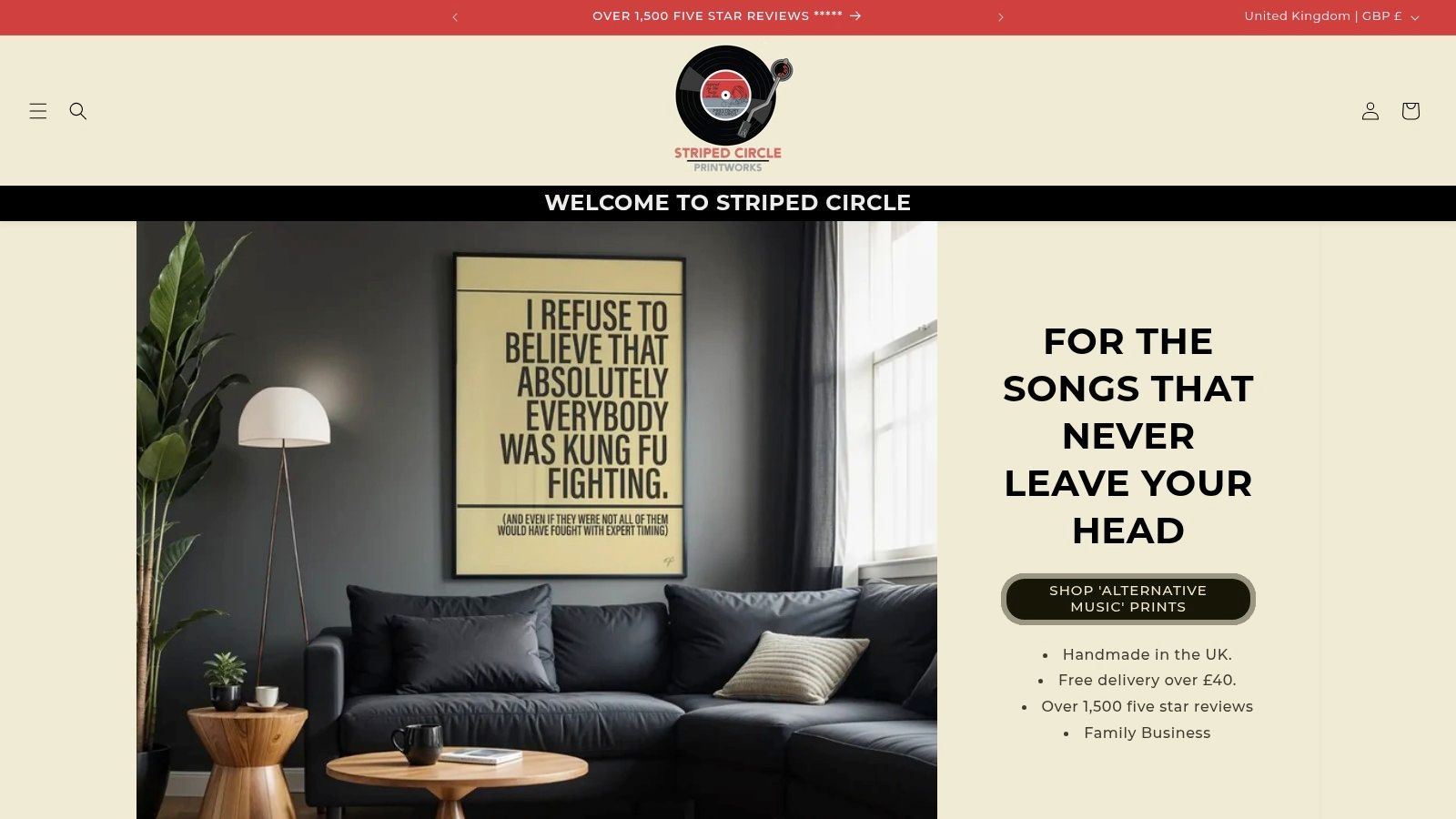
Striped Circle offers greeting cards alongside music and football-inspired wall art, including blank-inside cards in two sizes with a plain white envelope. Browse their handmade greeting cards for the full range. The blank interior gives the artwork room to make the first impression while leaving space for the detail that makes your relationship unmistakable.
The best design prompts a smile before the card opens. If your partner spots their favourite band or club and says, “You remembered that,” you have avoided the greeting-card equivalent of beige wallpaper.
Picking the Perfect Tone for Your Message
The tone should match the couple, not the occasion's marketing department. Some people want a sincere declaration. Others would rather receive affection disguised as a joke about terrible timekeeping, fantasy football or the fact that one person still can't load the dishwasher correctly.
A useful message usually combines warmth with one honest detail. The humour gives it personality, while the sincere line stops it sounding as though you're accepting an award for Best Ongoing Relationship.
Three voices that usually work
The heartfelt approach suits a partner who appreciates direct affection. Mention a moment that changed the year for you, then explain what you value now. “I loved the big days, but I'm happiest in the ordinary ones with you” is more personal than a string of dramatic adjectives.
The cheeky approach works when teasing is part of your normal language. You could refer to surviving each other's television choices, music recommendations or match-day moods. Keep the joke affectionate and finish with a clear statement of love, otherwise the card may sound like a review left by a mildly disappointed customer.
The shared-culture approach uses music, football or popular culture as shorthand. A lyric reference, club tradition or familiar film line can make the message feel instantly recognisable. Don't rely on the reference alone, though. Add why it matters to you both, because even the finest lyric can't do all the emotional admin.
The safest joke is one that makes your partner feel included, not examined.
Avoid borrowed romance
Online templates can help when the blank page has become psychologically threatening, but copy-pasting one usually produces a message with the personality of a hotel hand soap. Use a template only as a prompt, then replace its general language with your own memory.
Try this structure:
- Open with the milestone: Acknowledge the first year without making it sound like a quarterly business review.
- Name one memory: Choose a small, concrete moment rather than listing every date in the calendar.
- Say what you appreciate: Focus on a quality or habit you clearly notice.
- Look ahead: End with excitement for more ordinary days, adventures and questionable decisions together.
Here's the supplied video for extra inspiration while your inner wordsmith stops hiding behind the sofa.
Writing the Message and Presenting It
Writing the card is easier when you stop trying to make it perfect. Your partner isn't grading your metaphors, and “forevermore” probably isn't needed unless you normally speak like a Victorian ghost.
Use a short sequence that gives the message shape:
- Begin with the moment: “I still think about our first…” is a natural opening if you finish it with something specific.
- Add the meaning: Explain what that memory says about the relationship or what you appreciate about your partner.
- Include the private detail: Add the song, club, meal, phrase or ridiculous incident only the two of you would understand.
- Finish with intention: Say that you're looking forward to more time together, rather than ending abruptly after the punchline.
“Happy anniversary, I love you” is a perfectly respectable foundation. It just needs a detail attached to it. “Happy anniversary. I still laugh about the rain-soaked walk home after that gig, and I love how you make even the disastrous days feel like stories worth keeping” sounds like it came from a person who was actually there.
Make the delivery part of the gift
Presentation changes the mood before the first sentence. Put the card in a clean envelope, add a small handwritten tag, or leave it somewhere your partner will find it during the day. The location should feel thoughtful, not like you've hidden evidence in a kitchen drawer.
If the card accompanies a music or football print, wrap the artwork neatly or place it where the design can be seen before the card is opened. You don't need elaborate packaging. A tidy presentation signals that you made a choice rather than grabbed an emergency gift while buying toothpaste.
Small detail, large effect: Write the message by hand, even if your handwriting looks like a referee's notes after a controversial derby.
Check the date, spelling and name before sealing the envelope. Romance is powerful, but it can't always recover from addressing your partner as the name of an ex, a colleague or the delivery driver.
Final Thoughts on Making It Count
A first anniversary card doesn't need to perform emotional gymnastics. The strongest choice usually comes from matching the format to the recipient, selecting a design linked to your shared interests, and writing one honest message that couldn't belong to anyone else.
Consider a couple who spend weekends discussing football tactics, soundtrack every car journey and laugh at the same embarrassingly bad film quotes. A floral card might be perfectly attractive, but it tells them very little. A club-inspired or music-led design, paired with a note about the song that carried them through the year, creates a keepsake with a life beyond the anniversary itself.
Spend thought before money
Budget pressure doesn't remove the need for meaning. It makes relevance more important. A simple card with a properly chosen detail can feel more generous than an expensive bundle that has no connection to the recipient.
If you're adding an experience, keep it aligned with how you spend time together. A tasting night anniversary gift idea may suit a couple who enjoys trying drinks and comparing notes, while another pair might prefer a match, gig or night in with a favourite album. More suggestions can be found in these anniversary gift ideas for couples, but the same test applies to every option: would your partner choose this, or have you chosen it because the internet made it look romantic?
Before you seal the envelope, ask whether the card reflects three things: what you've shared, what you appreciate and what you're looking forward to. If it does, stop editing. The message may not be literary genius, but it will sound like you, which is exactly the point.
The nerves are normal. Most of us become suspiciously bad at writing once the subject is someone we love, as though the pen has suddenly discovered the stakes. Choose the format with care, add a proper personal reference, and let a little humour breathe alongside the affection.
Striped Circle creates music and football-inspired greeting cards and wall art, including unique prints designed to bring personality to homes and offices. Visit Striped Circle to find a card or print that turns your first-anniversary message into something worth smiling at long after the big day.
