
Great Gatsby Soundtrack: Tracks, Chart Run and Wall Art
Thirty-four weeks is a long time to keep buying an album after the party's supposedly over. By the chart week of 29 December 2013 to 4 January 2014, the Great Gatsby soundtrack was still at number 7 and had reached 34 weeks on the chart, according to the Official Charts Company listing for 17 November 2013 and the run that followed. That's not opening weekend curiosity. That's people going back, months later, and paying for the record again.
That staying power changes how you should read this album. It isn't just Baz Luhrmann borrowing modern pop to make the 1920s look shiny, though it certainly does that with indecent enthusiasm. It's a pop compilation that UK buyers treated as an album in its own right, one that outlasted the film's cinema run and kept competing with other soundtrack releases. The interesting question isn't whether the music is glamorous. It's whether all that glamour helps you hear Fitzgerald's warning about wealth, or whether it drowns the warning in champagne.
Table of Contents
- The Great Gatsby Soundtrack at a Glance
- Key Tracks and the Artists Behind Them
- How the Soundtrack Held Its UK Chart Position
- How the Music Reflects Gatsby's Themes
- How to Build a Gatsby Listening Playlist
- Wall Art and Gifts Inspired by the Soundtrack
The Great Gatsby Soundtrack at a Glance
Baz Luhrmann's soundtrack arrived in the UK on 6 May 2013 through Interscope Records, and it makes no attempt to sound like a museum exhibit. It's a contemporary pop collection built for a period film, which is either clever time travel or musical anarchy, depending on your tolerance for hearing modern artists crash a 1920s ballroom.
You're choosing between two editions, and the difference matters more for how you'll listen than for how much you'll get. The standard edition is tight and direct. The deluxe sits closer to the movie itself.
The Great Gatsby soundtrack editions at a glance
| Edition | Release | Tracks |
|---|---|---|
| Standard UK edition | 6 May 2013, Interscope Records | 14 |
| Deluxe UK edition | 6 May 2013, Interscope Records | 21 |
Those extra seven tracks are spoken film material and alternate versions rather than new songs. The deluxe isn't a second album bolted onto the first. It's atmosphere, fragments and alternate takes, the kind of material that turns a pop record into a souvenir of the film. The standard edition sells you the songs. The deluxe sells you the cinema ticket again.
Why the Debut Matters
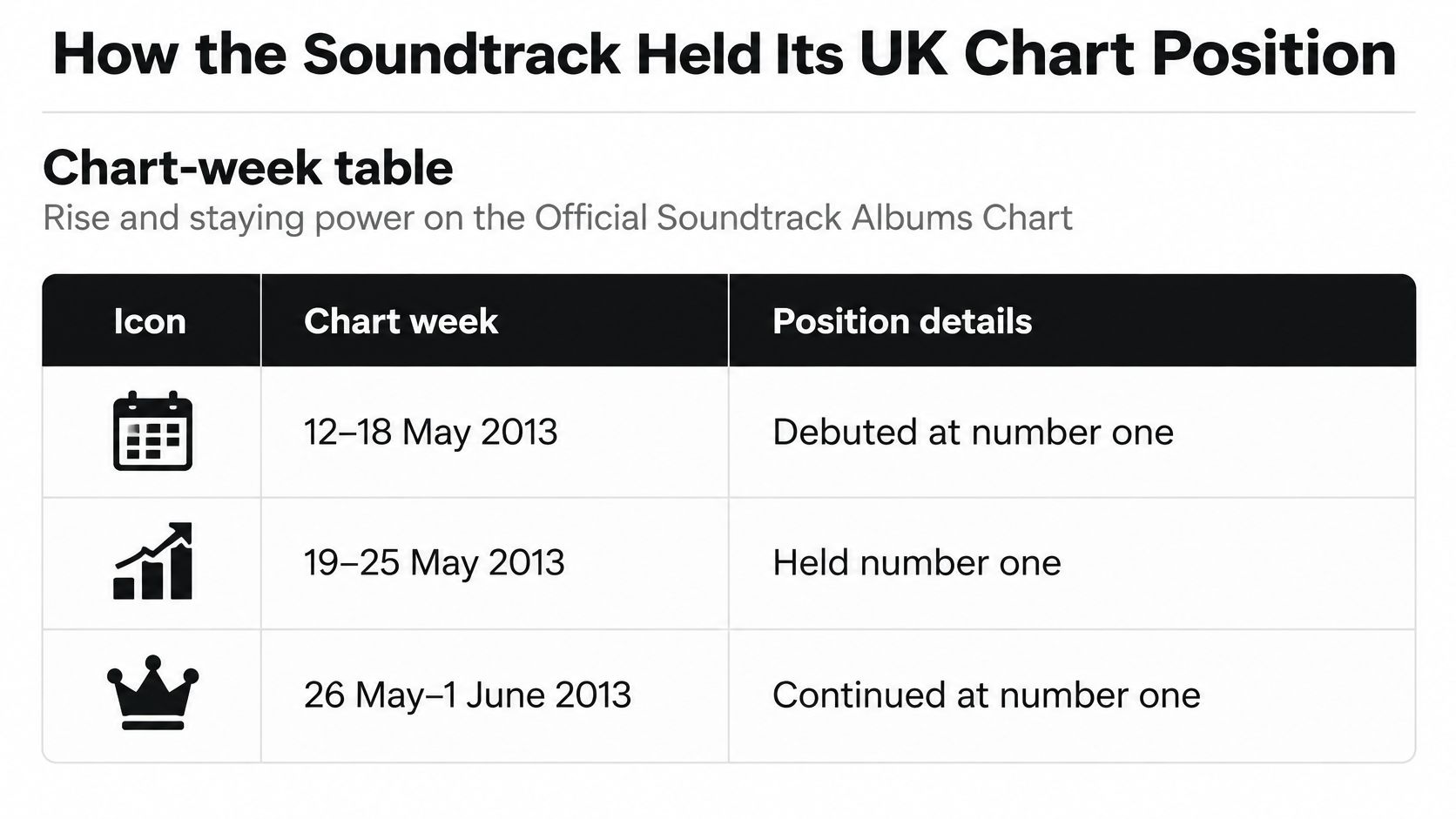
The album didn't creep in politely. It debuted at number one on the Official Soundtrack Albums Chart for the week of 12–18 May 2013, as recorded by the Official Charts Company chart for that week.
That position means the album outsold every other soundtrack in its first week on sale. It arrived at the top of the pile wearing a suspiciously expensive hat, which feels about right for Gatsby.
The sound explains part of that pull. Contemporary hip-hop, electronic music, indie rock, orchestral pop and jazz-revival arrangements sit side by side, mapping the 1920s onto modern pop culture instead of recreating period music note for note. You hear the present commenting on the past, which is the whole trick of the film. It's also where the album's real wager sits: stacking luxury-brand pop on top of a story about the emptiness of luxury either sharpens Fitzgerald's satire or smothers it in spectacle.
Practical rule: Pick the standard edition for a compact listen, and the deluxe if you want the spoken excerpts and alternate material.
Pick your edition first. Everything else about this album follows from that choice.
Key Tracks and the Artists Behind Them
Start with the line-up, because the line-up is the strategy. This isn't one composer hiding behind an orchestra. It's a cast list, and each name pulls a different audience through the door.
Selected tracks and what makes each one stand out
| Track | Artist | Why it stands out |
|---|---|---|
| Young and Beautiful | Lana Del Rey | Lead single and the track most linked to the film |
| Crazy in Love | Jay-Z, Beyoncé and André 3000 | Hip-hop and R&B collaboration |
| Over the Love | Florence + The Machine | Orchestral pop with a big, sweeping sound |
| Love Is Blindness | Jack White | Rock-leaning contrast to the pop tracks |
Lana Del Rey's “Young and Beautiful” does the heavy lifting as the lead single, and it's the song most listeners attach to Daisy and Gatsby's doomed romance. Around it, the album stacks Jay-Z, Beyoncé and André 3000, Florence + The Machine, The xx, Jack White, Nero, Sia, Bryan Ferry and Emeli Sandé, a list reported alongside the album's UK Gold certification representing 100,000 certified units in the album's certification and release history.
The Economics Behind the Cast List
There's a plain commercial logic here, and it's worth naming because it explains so many modern soundtracks. Recognisable artists lower discovery friction. You don't need persuading to try a track by an artist you already follow, so you press play faster and complain less.
New or exclusive recordings do the second job. They give you a reason to buy or stream this album rather than building a similar playlist from songs you already own. Without that, a soundtrack is just someone else's shopping list.
Timing sharpened the effect in the UK. The soundtrack landed on 6 May 2013, shortly before the film's 16 May UK theatrical release, so listening and cinema-going fed each other in the same fortnight. You could hear the record, get curious, and book a ticket while the songs were still stuck in your head like glitter on a carpet.
The Gold milestone matters for the same reason. It shows the album reached well beyond film obsessives and Lana Del Rey completists. A niche tie-in doesn't shift certified units at that level.
How to Approach the Tracklist
Don't start at track one and march in order if that feels like homework. Try this instead:
- Start with your artist: Pick the name you already love and play that track first.
- Work outwards: Move to the nearest musical neighbours, then to the contrasts.
- Save the lead single test: Return to “Young and Beautiful” last and see if it still feels central.
That route works for other film albums too, and if you enjoy comparing how soundtracks build their casts, our guide to the 13 Going on 30 soundtrack and its era-defining choices makes a fun companion listen.
Treat the table above as a selection, not the whole story. The full 14-track standard edition holds more to explore, and the pleasure is hearing how unlike each other these artists are while supposedly attending the same party. Frame it as an ensemble cultural object, not a single-artist release with guests. That's how it was built, and that's how it holds up.
How the Soundtrack Held Its UK Chart Position
Two columns, two different stories. Position tells you where the album sat in a given week. Weeks on chart tells you how long it had been selling up to that point, which is the endurance measure. All figures below are drawn from the Official Charts Company's soundtrack albums listings.
UK Official Soundtrack Albums Chart run
| Chart week | Position | Weeks on chart |
|---|---|---|
| 12–18 May 2013 | Debut at number 1 | 1 |
| 9–15 June 2013 | Number 1, fifth consecutive week at the top | 5 |
| 30 June–6 July 2013 | Number 1 | 8 |
| 17 November 2013 | Number 2 (peak: number 1) | 28 |
| 29 December 2013–4 January 2014 | Number 7 | 34 |
Reading the Run Row by Row
The debut at number 1 gives you impact. Five consecutive weeks at the top gives you something better: proof that week one had genuine demand behind it, well beyond pre-orders and posters.
By early July it was still number 1, eight weeks into the run. Most film tie-ins would be packing their bags by then. This one was still ordering another round.
November is where the argument gets interesting. Dropping to number 2 after 28 weeks shows a slow descent from a very high floor. The album had moved from event purchase to catalogue purchase, the kind people make after borrowing a copy, hearing a track at a party, or finally watching the film at home.
Even the slide to number 7 at 34 weeks supports that reading. A placing that late in the year means people were still buying the record outright, long after the cinema crowds had gone home. Nobody accidentally buys a CD for eight months.
An album that keeps selling for months stays easy to find, in shops and in conversation.
That staying power is also a verdict. Luhrmann's gamble on modern pop over period jazz could have burned bright and vanished once the film left cinemas. Instead, buyers kept voting for it with their wallets across two thirds of a year, which suggests the spectacle earned an audience on its own terms rather than borrowing the film's.
The practical gift-buying takeaway follows from the same data. Longevity makes this a safe pick for shared listening and presents, because the recipient has probably heard of it, knows at least one artist on it, and won't look at you as if you've handed them homework.
How the Music Reflects Gatsby's Themes
An album built for a themed party turns out to be doing harder work. The soundtrack's themes include partying, murder, heartache, illusionary love, leisure-class excess and the curse of money, themes set out in the BBC account of Baz Luhrmann's soundtrack stories. Its modern styles were selected to help audiences connect with a period nearly a century earlier. The anachronism is a translation.
Accessibility or Luxury Fantasy
That translation creates the central tension. Does modern pop make the 1920s feel immediate, so you recognise Gatsby's world in your own? Or does the spectacle turn Fitzgerald's critique of wealth into a luxury fantasy you can dance to and then post online?
Both things can happen in the same song. A track can sonically celebrate the party while its lyric shows you the bill. Fitzgerald's original context was a society sorting people by money, birth and appearance, and modern adaptation choices restage those pressures using artists whose own public images carry ideas about fame and status.
Listen for four pressures underneath the sparkle:
- Aspiration: Characters perform wealth they don't securely possess.
- Inherited privilege: Old money treats access as a birthright, not an achievement.
- Racialised cultural exchange: Modern Black musical forms carry a story set in a segregated era, which changes what the party scenes mean.
- Appearance versus reality: The louder the celebration, the emptier the room often feels.
The album earns its keep in that last contrast. If everything sounded sad, you'd never understand why people wanted into Gatsby's house. The music has to seduce you first, then leave you slightly uneasy about being seduced.
A Useful Comparison and a Listening Test
Gatsby adaptations that put class anxiety in their song titles make the comparison sharper. A stage version can afford to say plainly that new money is the whole subject, while the film soundtrack hides the same critique inside pop pleasure. Hearing both approaches side by side shows you what Luhrmann's version is up to: the polish is doing the seducing, and the words are doing the warning.
Try a simple listening test with any track here. Play it once as a party song, up loud, and notice what your body does. Play it again and ask who gets to enjoy this party, who is performing, and who is being watched.
The critique appears when you listen for who pays for the fun.
You'll probably land where the album wants you. It works as both celebration and commentary, and which one dominates depends on how closely you listen. That ambiguity is the most Fitzgerald thing about the record.
How to Build a Gatsby Listening Playlist
A good Gatsby playlist needs an arc, not just good songs in a pile. You're moving from arrival, to excess, to the quiet drive home where somebody says something they can't take back.
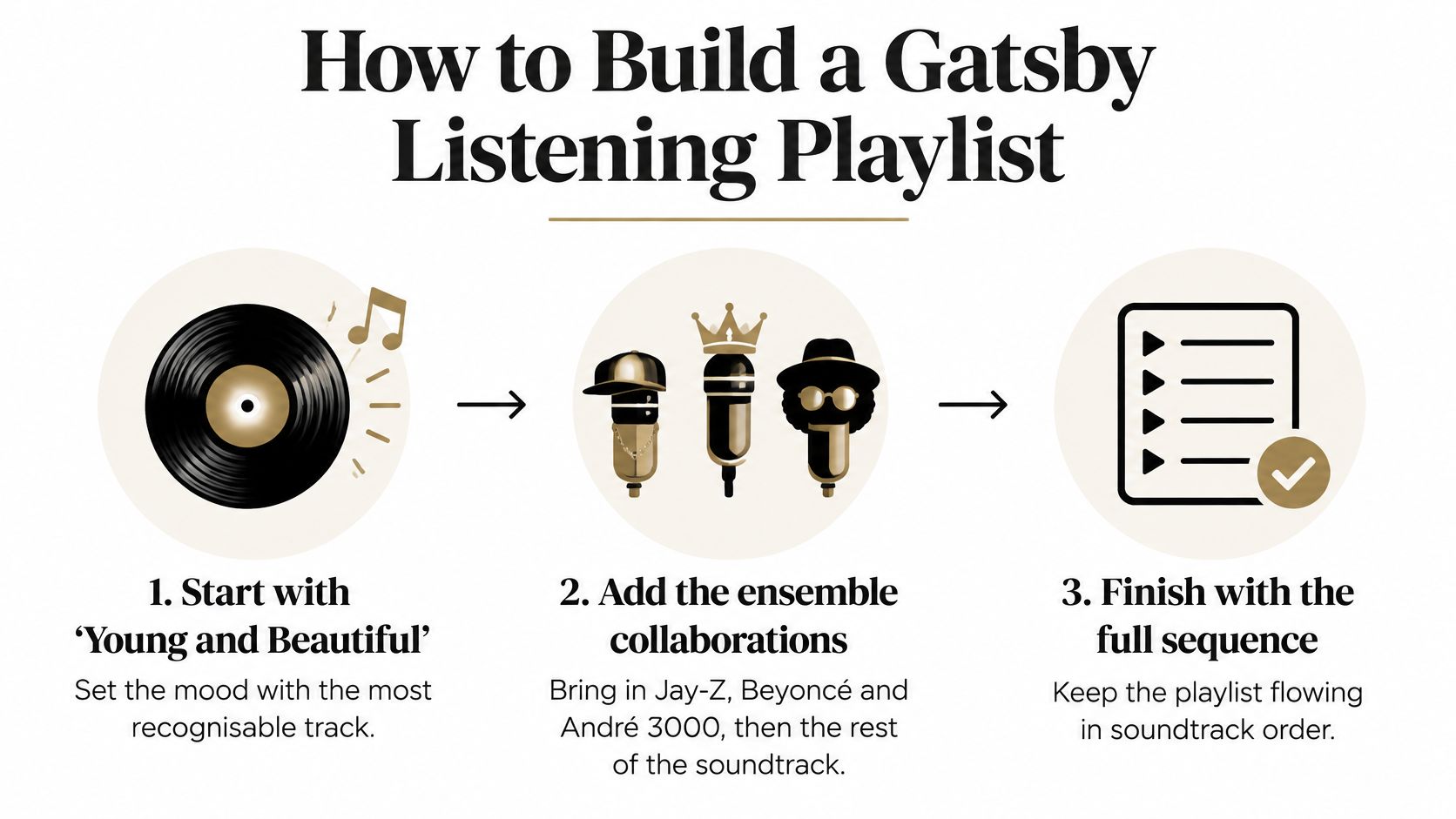
- Start with “Young and Beautiful”. It's the most recognisable track, so it sets the mood instantly. Opening with familiarity gets guests, or just future you on a train, settled fast.
- Add the ensemble collaborations next. Bring in Jay-Z, Beyoncé and André 3000, Florence + The Machine and Jack White while energy is high. Contrast early keeps the sequence awake.
- Sort the middle by mood. Put party tracks first and slower songs after, so the heartbreak arrives later. Front-loading sadness makes a playlist feel like a lecture.
- Slot in one jazz-age track from your own library. Place it between pop songs to restore the 1920s flavour. One is enough, you're seasoning, not staging a re-enactment.
- Place the deluxe extras near the end. Use spoken-film excerpts and alternate material as a closing movement rather than interruptions.
- Check the run time before you save it. Judge whether you want a compact session or the fuller film-shaped version.
- Name it after a line from the film, then share it. A good title makes people open the thing.
Using the Deluxe Material Well
The deluxe UK release expands to 21 tracks and about 41 minutes against the standard 14 tracks and approximately 38 minutes, and it adds a second version of “Young and Beautiful” plus the closing “Gatsby believed in the green light”, as listed on the Apple Music UK deluxe edition page. That closing piece is your natural full stop. Don't bury it in the middle where shuffle brain will skip it.
If you're comparing listening sessions across albums, our roundup of the best albums to listen to in full is a handy way to test whether your Gatsby sequence holds together as well as a purpose-built record.
For a visual sense of how these songs sit against the film's world, watch the clip below after you've drafted your order, not before. Your ears should lead.
Now run the pass-or-fail test. Play it straight through without skipping. It works if there are no dead spots and the closing track feels like an ending rather than a shuffle accident. If you reach for your phone twice, reorder without mercy.
Wall Art and Gifts Inspired by the Soundtrack
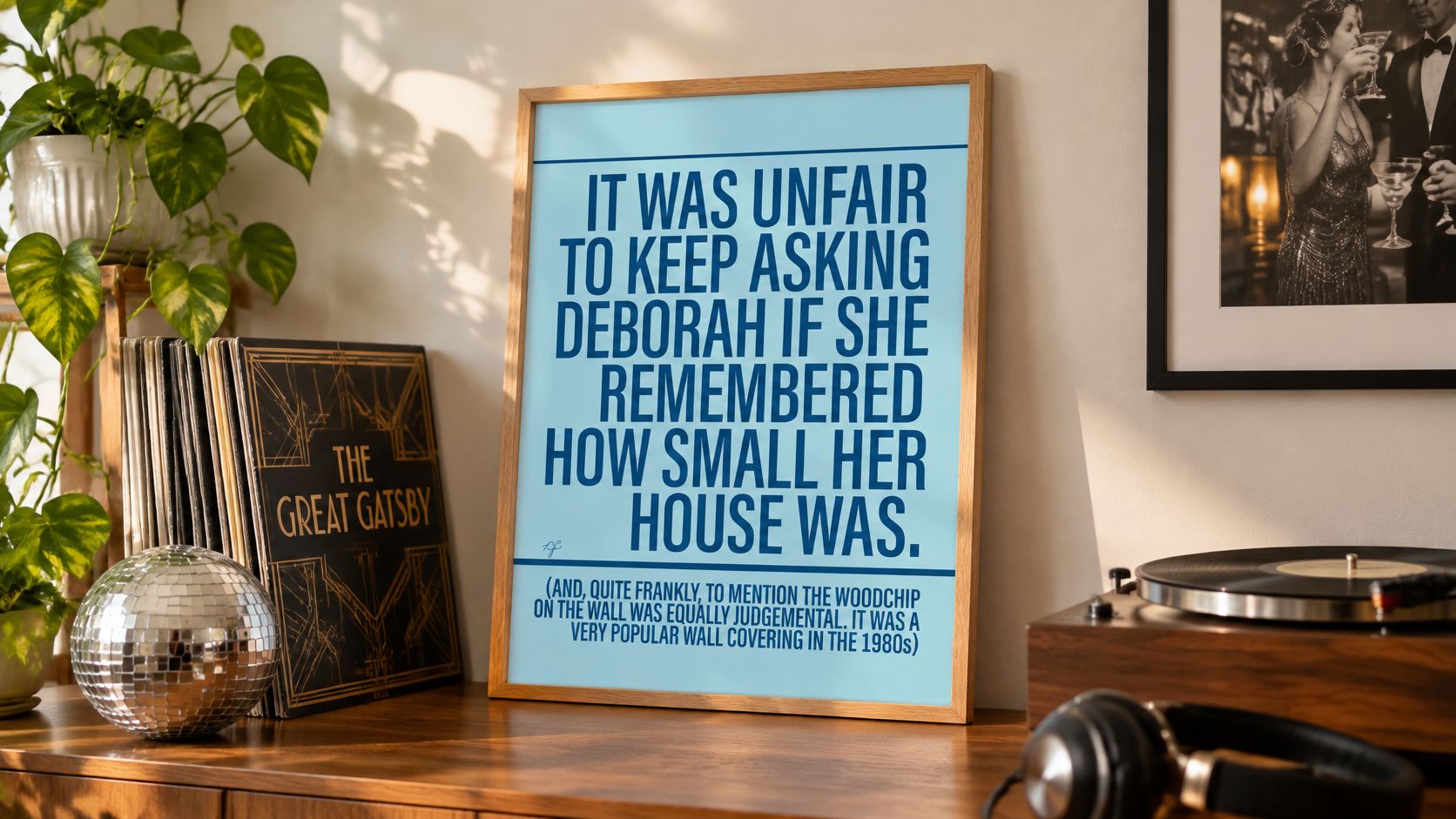
None of the prints in our range carries official Gatsby branding, so the pairing works on mood. The album supplies plenty of it: an era drawn in gold and glare, choruses your guests already know, and Fitzgerald's critique of wealth rendered as spectacle. A wall that nods to all three earns the record player beside it.
Three pairings suit this album:
- A lyric print for the repeat track: the song you kept replaying goes on the lounge or study wall, where the record player can agree with it.
- A bold era-inspired poster for the hallway: guests see it before they reach the drinks, which is exactly when tone gets set.
- A gift for an album art collector: music-led artwork that sits well beside shelves, vinyl or a desk.
Recognition does the heavy lifting. Music prints and alternative lyric prints land instantly because visitors already know the song, while non-music prints suit a quieter room that wants colour without a chorus. The range covers Music Prints, Alternative Music Prints, Alternative TV & Film Prints, Non-Music Prints and Art & Places Prints, including Alternative Lyrics music prints, which are classic songs given our own lyric twists. Framed prints arrive ready to hang, which helps when your DIY enthusiasm is mostly theoretical.
Two products show the format in practice. The Disco 2000 print (Wholesale) is available from the shop's catalogue, and the Club Tropicana print (Wholesale) sits in the Alternative Music range, where it is a popular gift choice. Neither wears a tuxedo; both carry the instant recognition a Gatsby evening needs.
For more pairing ideas, browse our guide to music artwork prints for home and office walls. If you design or sell prints yourself, discover Redbubble opportunities with Trendlytic to see what buyers are searching for.
Football supporters get the same treatment. A house with a club it loves can hang a football print on the same logic, because a good soundtrack deserves a good wall and so does a good away win.
Choose the print that makes you smile every time you walk past it.
Put the record on tonight and give your favourite track a wall to match. Visit Striped Circle to browse music prints, alternative lyric prints, TV and film prints and football artwork for your home or office.
