
What Size Poster Frame Do I Need? A Simple Guide So You Don't Mess It Up
So, what’s the secret to finding the right size poster frame? It's simple, really: the frame size should match the exact dimensions of your print. If you have a standard A3 print (297 x 420mm), you need a frame sold as an A3 frame. Easy peasy.
But what if you want to add a mount—that classic, decorative border that makes everything look a bit posher? In that case, you'll need a larger frame, but one with an A3-sized opening (often called the 'aperture') for your print to sit in.
Your Guide to Choosing the Perfect Poster Frame
You’ve done it. You’ve finally got your hands on that print you’ve been eyeing up—a legendary moment frozen in time. Maybe it’s Gallagher swaggering across the stage at Knebworth or Cantona with his collar up, surveying his kingdom. But now it’s just sitting there, vulnerable to coffee spills and clumsy pets, while you face a question more stressful than a penalty shootout: what size poster frame do I need?
Let's be honest, choosing the wrong size is a visual own goal. A print swimming in a huge frame looks lost and insignificant, while one tragically cropped by a frame that’s too small is a crime against art. Don't worry, though. Think of this guide as your new gaffer, here to walk you through the simple steps to get it right and avoid any rookie mistakes.
Turning Framing Anxiety into Victory
Getting the sizing spot-on is what separates a good wall from a great one. It's a fundamental principle of interior design that applies to everything in your home, not just pictures. Just as it's crucial to find the right frame for your poster, selecting the correct size for other elements, like lighting, is key to creating a balanced space. It’s all about scale and proportion, a concept you can see in action in this foolproof guide to pendant light sizing.
The goal is simple: turn that framing anxiety into the pure satisfaction of a perfectly hung masterpiece. A well-framed print doesn't just hang on the wall; it makes a statement, completes a room, and brings a smile every time you see it.
Throughout this guide, we’ll break down everything you need to know:
- Cracking the Code: Getting to grips with standard UK poster sizes.
- The Golden Rule: How to measure your print with precision.
- Mounting a Challenge: Deciding if you need that stylish border.
Getting this right is a key step in creating a space that feels uniquely yours. For more inspiration on transforming your walls, check out our guide on how to decorate your walls and make every room sing.
Decoding Standard UK Poster Sizes
Alright, let's get to grips with poster sizes. All that talk of ‘A4’ and ‘A3’ can feel like a bit of insider jargon, but it’s actually much simpler than you might think. This is your handy guide to matching your print to its perfect off-the-shelf frame, no guesswork required.
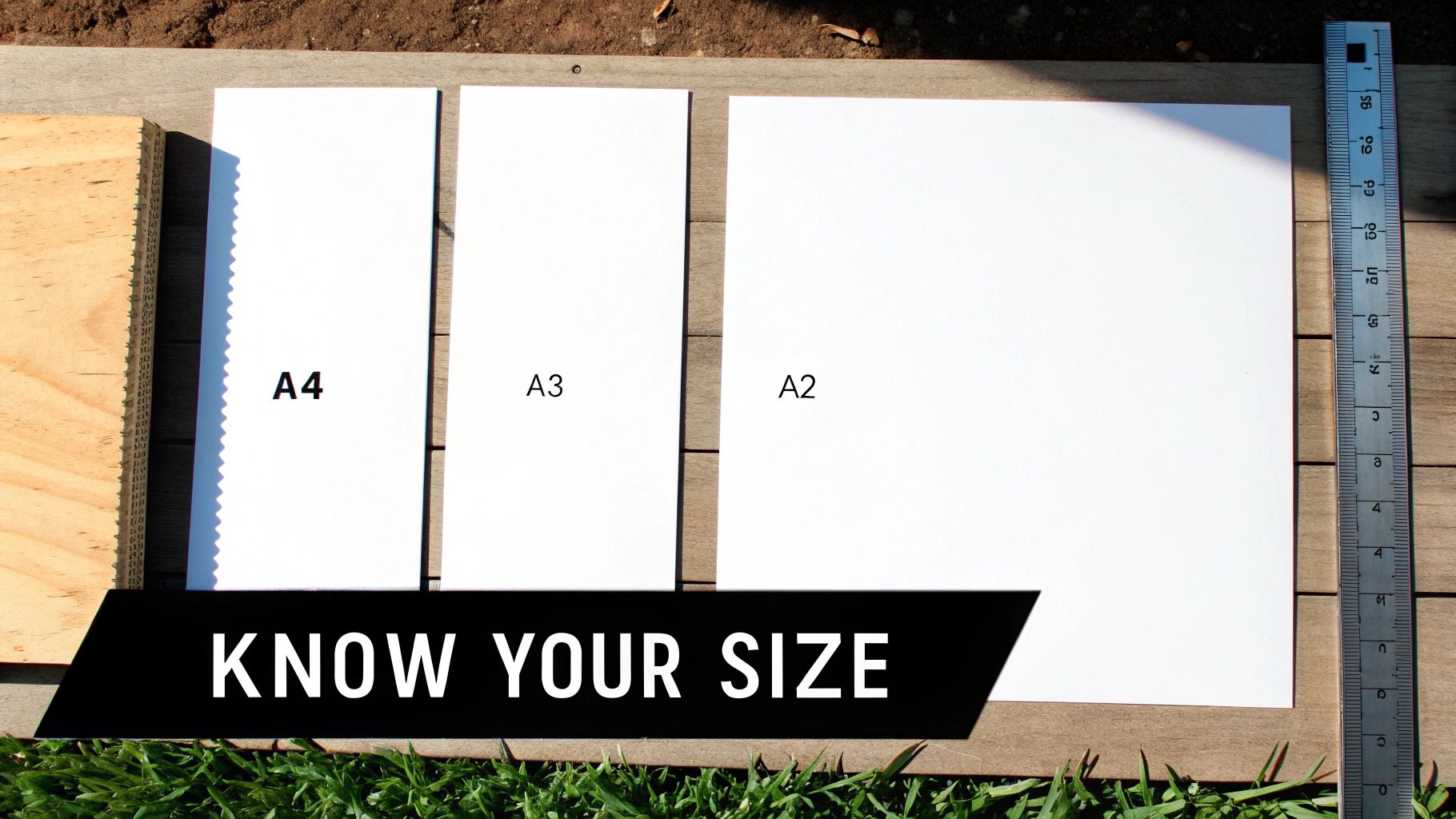
A good way to think about the 'A' sizes is to imagine each one as a step up. An A4 print is the most familiar – it's your standard letter size, perfect for smaller spaces or as part of a collection. Go up to an A3, and you've doubled it. Go up again to an A2, and you've doubled the A3. Simple as that. It’s the Russian Doll of paper sizes.
This system is your best friend when buying frames because most UK retailers stock sizes that match these standards perfectly. It means you can usually find just what you need without having to pay for a custom job.
The A-Team of Poster Sizes
The most common sizes you'll come across are part of the ISO 216 'A-series'. This includes A4 (210 x 297 mm), A3 (297 x 420 mm), A2 (420 x 594 mm), and the impressive A1 (594 x 841 mm).
To make things crystal clear, we've put together a quick breakdown. Now you’ll know exactly what you’re dealing with, whether your brain works in millimetres or inches.
Getting the frame size right from the start is the secret to making your print look its absolute best. It’s the difference between a poster just hanging on the wall and a piece of art that truly stands out.
For instance, our popular lyric prints are often sold in A3 or A4. These are brilliant, versatile sizes for creating a gallery wall or adding a splash of personality to a hallway. If you're looking for inspiration on how to arrange them, check out our guide to choosing the right prints for your living room.
UK Standard Poster & Frame Size Cheat Sheet
To save you from trying to convert measurements on your phone while you're out shopping, here's a simple cheat sheet. It translates the standard 'A' paper sizes into both metric and imperial, so you're always ready.
| Paper Size | Dimensions (Millimetres) | Dimensions (Inches) | Perfect For |
|---|---|---|---|
| A4 | 210 x 297 mm | 8.3 x 11.7 in | Small spaces, gallery walls, or that awkward bit of wall in the downstairs loo. |
| A3 | 297 x 420 mm | 11.7 x 16.5 in | The go-to size for most art prints. A versatile classic that works almost anywhere. |
| A2 | 420 x 594 mm | 16.5 x 23.4 in | A proper statement piece. Great for above a sofa or as a focal point in an office. |
| A1 | 594 x 841 mm | 23.4 x 33.1 in | The main event. This is for when you want your print to dominate the room and be seen. |
With this table handy, you can walk into any shop and confidently pick out the right frame, every single time.
How to Measure Your Print Properly (Don't Be a Muppet)
Right, let's get down to the nitty-gritty. When it comes to finding the right frame, getting your measurements spot-on is absolutely crucial. Guessing is a recipe for disaster, a bit like letting a toddler decorate your living room wall with a permanent marker. You'll either end up cramming your print into a frame that's too small or leaving it swimming in a space so big it looks like a postage stamp on a billboard.
This isn't rocket science, but a little bit of care now will save you a massive headache later. So, let’s make sure you get it right the first time and avoid that soul-crushing trip back to the frame shop.
The Golden Rule: Measure Twice, Buy Once
First things first, you'll need a decent metal tape measure. That flimsy paper one that came in a Christmas cracker? Chuck it. The only thing it's good for is measuring your level of disappointment with the terrible joke that came with it. The golden rule here is simple but sacred: measure twice, buy once. Seriously, chant it to yourself. It's the mantra that separates framing pros from frustrated amateurs.
You might be tempted to just use the size listed on the website where you bought the print. Don't fall into that trap. While we pride ourselves on being precise here at Striped Circle, tiny variations can always occur during the printing and trimming process. We're only talking about a few millimetres, but in the world of framing, a few millimetres can be the difference between a snug, professional fit and a glaring, awkward gap.
Always, and we mean always, measure the physical print you're holding in your hands. Relying on the online dimensions is like trusting a weather forecast from last week—it’s a gamble you’re probably going to lose.
Your Step-by-Step Guide to Nailing It
Ready for the laughably simple process? Here’s exactly how to get the dimensions you need before you even start looking at frames.
-
Find a Flat Surface: Lay your print on a clean, flat area, like a large table or even a clean bit of floor. Whatever you do, don't try to measure it while it's still rolled up or held against a wall. That’s just asking for wonky numbers.
-
Measure the Width: Place your tape measure at the very left edge of the paper and stretch it straight across to the very right edge. Make sure you’re measuring the entire width of the paper, not just the printed image area. Write that number down.
-
Measure the Height: Now, do the exact same thing vertically. Measure from the absolute top edge of the paper right down to the bottom edge. Add this number to your notes.
And that's it. You've done the hard part. You now have the two most important pieces of information for your frame-hunting quest. With these exact dimensions, you can step out and find the perfect home for your print with total confidence.
Deciding if You Need a Mount for Your Frame
Right, let's talk about the mount. Think of it as the stylish warm-up act for your main event poster – the brilliant opening band that gets the crowd buzzing before the headliner. It’s that crisp border, usually white or off-white, that sits between your print and the frame, giving your artwork some much-needed breathing room.
A mount instantly makes any print look more professional. It’s the difference between something that looks like it belongs in a proper gallery versus something blu-tacked to a student flat wall. It draws the eye inward, focusing all the attention on that glorious print of Liam Gallagher's parka or Mo Salah celebrating another screamer.
But here’s the crucial bit: using a mount completely changes how you calculate your frame size.
To Mount or Not to Mount
Adding a mount means you need a bigger frame. Simple as that. For example, if you have an A3 print and want to add a mount, you'll need to buy a frame designed for a larger size, like A2, but one that comes with an A3-sized opening (often called the aperture). It’s a straightforward rule, but one that catches so many people out.
So, when should you use one?
- Art Prints & Photos: A mount is almost always a good idea for more artistic prints or photographs. It just adds a touch of class and sophistication.
- Busy Prints: If your print has a lot going on right up to the edges, a mount can stop it from feeling cramped or claustrophobic inside the frame.
And when should you go 'full-bleed' and have the print go right to the edge? This works best for bold, graphic posters where the image is meant to fill the entire space, making a loud and proud statement without any borders getting in the way.
Before you even think about mounts, though, you need to get your measurements spot on. This handy guide shows the simple steps to get it right every time.
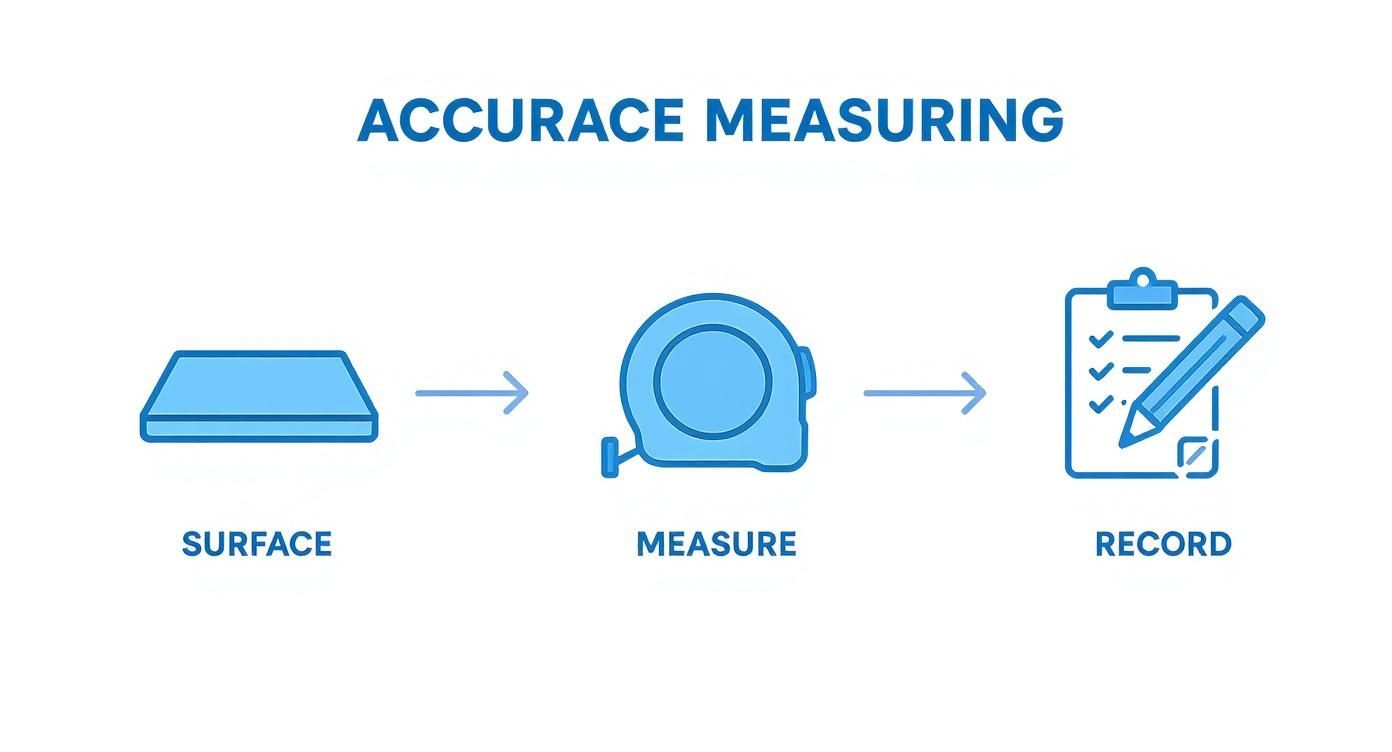
The key takeaway here is that precision starts with a simple, repeatable process: find a flat surface, use a good tape measure, and write down the exact numbers.
Calculating the Perfect Fit with a Mount
Figuring out the right size is easier than you might think. With the boom in home decorating, getting these details right has become more important than ever. In fact, the United Kingdom’s picture frame market is set to grow by around 3.6% annually through 2030, partly driven by a rising demand for frames that can accommodate mounts for all kinds of art. You can read the full research about the UK picture frame market to see just how popular this is becoming.
The rule of thumb is this: Frame Size = Print Size + Mount Border x 2. For example, if your A4 print (210mm wide) has a 50mm mount border on each side, you need a frame with an internal width of at least 310mm (which is 210 + 50 + 50).
It’s that simple bit of maths that ensures your print sits perfectly centred, looking like it was put together by a professional. Getting it right transforms your wall art from 'just a poster' into a proper centrepiece.
Ready-Made Frames vs Custom Framing
Right, let's tackle the big question: ready-made frames or a fully custom job? This is the classic head-to-head, a bit like choosing between a reliable high-street chain and a specialist artisan shop. One is quick, affordable, and gets the job done without a fuss. The other is a premium, tailor-made experience that fits like a glove.
Ready-made frames are the go-to for most of us. They're brilliant for standard print sizes, you can find them everywhere, and they're perfect for getting that new artwork on the wall with minimal faff. Think of them as the dependable choice – affordable, accessible, and they do exactly what you need them to do.
But what if your print is a bit of an odd size? Perhaps it’s a vintage gig poster or an unusually shaped piece of art that doesn't fit neatly into a standard A4 or A3 frame. This is where custom framing really comes into its own.
When to Go Bespoke
Opting for a custom frame is your best move when an off-the-shelf solution simply won’t do. It will cost you a bit more, but you’re paying for a perfect fit that’s made-to-measure for your unique print. It's the only way to guarantee your awkwardly sized masterpiece gets the star treatment it deserves.
A custom frame opens up a world of possibilities. You can hand-pick the exact material, colour, and even the type of glazing—like UV-protective glass to stop your print from fading over time.
The market for both is massive. The UK's Posters and Frames market was valued at around $6.6 billion in 2024, showing there's a huge appetite for both standard sizes and unique, custom dimensions. Personalisation is a big deal these days, and you can discover more insights about the UK frame market to see just how much it's growing.
Making the Final Call
So, which path should you take? It really comes down to your print and your budget.
- Go Ready-Made If: Your print is a standard A-series size (like most of our Striped Circle collection), and you want a stylish, affordable solution that’s ready to hang straight away.
- Go Custom If: Your print is an unusual size, holds a lot of sentimental value, or you want total control over the finished look with specific materials and protective glazing.
For a deeper look into getting your framed prints looking their absolute best, check out our guide on how to frame posters like a pro. It's packed with extra tips to help you out. At the end of the day, whether it’s off-the-shelf or made-to-measure, the goal is the same: get that print looking fantastic on your wall.
A Few Final Framing Questions Answered
Still have a couple of questions rattling around? No problem at all. Let's tackle some of the most common queries we get asked about framing.
Why Does My A3 Print Not Fit in This A3 Frame?
Ah, the classic framing predicament. You’ve bought an A3 frame for your A3 print, but it’s swimming in it. This usually happens because an 'A3 frame' is often designed to hold an A3 print with a mount included. This means the frame's internal dimension is actually larger to accommodate that extra border.
The key is to always check the 'aperture size' listed on the packaging. For that clean, full-bleed look where the print sits right up against the frame, the aperture measurement needs to match your print size exactly.
What Is the Difference Between Frame Size and Aperture Size?
Good question, as this catches a lot of people out. 'Frame size' typically refers to the artwork size it's designed for, like A4 or A3. It's the general label. The 'aperture size', on the other hand, is the precise measurement of the visible opening at the front of the frame or mount.
Think of it this way: the frame size is the name on the ticket, but the aperture is your actual seat number. It's the most important measurement for ensuring your print fits perfectly without falling through the gap.
Should the Frame Colour Match My Wall or My Print?
Honestly, there's no single right answer here—it’s all about the look you're going for.
Matching your frame to a dominant colour in the print can create a really slick, cohesive feel. But a contrasting frame, like a sharp black one against a pale print, can make the artwork really pop off the wall. If you're ever stuck, you can't go wrong with a neutral frame in black, white, or natural oak. They’re the reliable choice that works with almost any print or wall colour.
While we're talking about standard poster frames, some items require more specialised attention. For valuable documents like academic certificates, you might want to look into specific options like Doctoral Diploma Frames.
Is Acrylic Glazing Better Than Glass?
Acrylic glazing, which you might know as Perspex, is a high-quality plastic that’s often used instead of glass in modern frames. Its biggest advantage is that it's much lighter and shatter-resistant, which is fantastic for shipping and for hanging larger frames above a sofa without any worry.
It usually arrives with a protective film on both sides that you just peel off. While some people prefer the traditional weight of glass, modern acrylic offers brilliant clarity and is often the most practical choice for prints and posters.
Ready to put all this newfound knowledge to the test? Check out the full range of unique, high-quality music and football prints at Striped Circle and find the perfect piece to make your walls sing. Explore our collection at https://www.stripedcircle.com.
