
A4 Frame Size in CM: A Simple Guide to Perfect Wall Art That Won't Look Rubbish
Right, let's get this sorted. You've just bagged a fantastic new print – maybe some classic Oasis lyrics or a nod to your team’s glory days – and now it’s time to get it on the wall. The first thing you need to know is the magic number for an A4 frame size: 21 x 29.7 cm.
Getting The Measure Of Your Masterpiece
That 21 x 29.7 cm figure isn't just a random set of numbers pulled out of a hat. It’s part of the globally recognised ISO 216 standard, a clever system that keeps printers, designers, and your living room wall all singing from the same hymn sheet. Knowing this is the first step to avoiding that tragic look of a print swimming in a frame that's too big, or worse, being brutally cropped by one that's too small.
Think of it as the offside rule of wall décor – it’s just fundamental to getting it right. Before we dive deeper, it's worth getting a feel for the full range of standard paper sizes to see where A4 fits in the family.
This simple concept map shows how everything connects, from the print itself to the perfect frame.
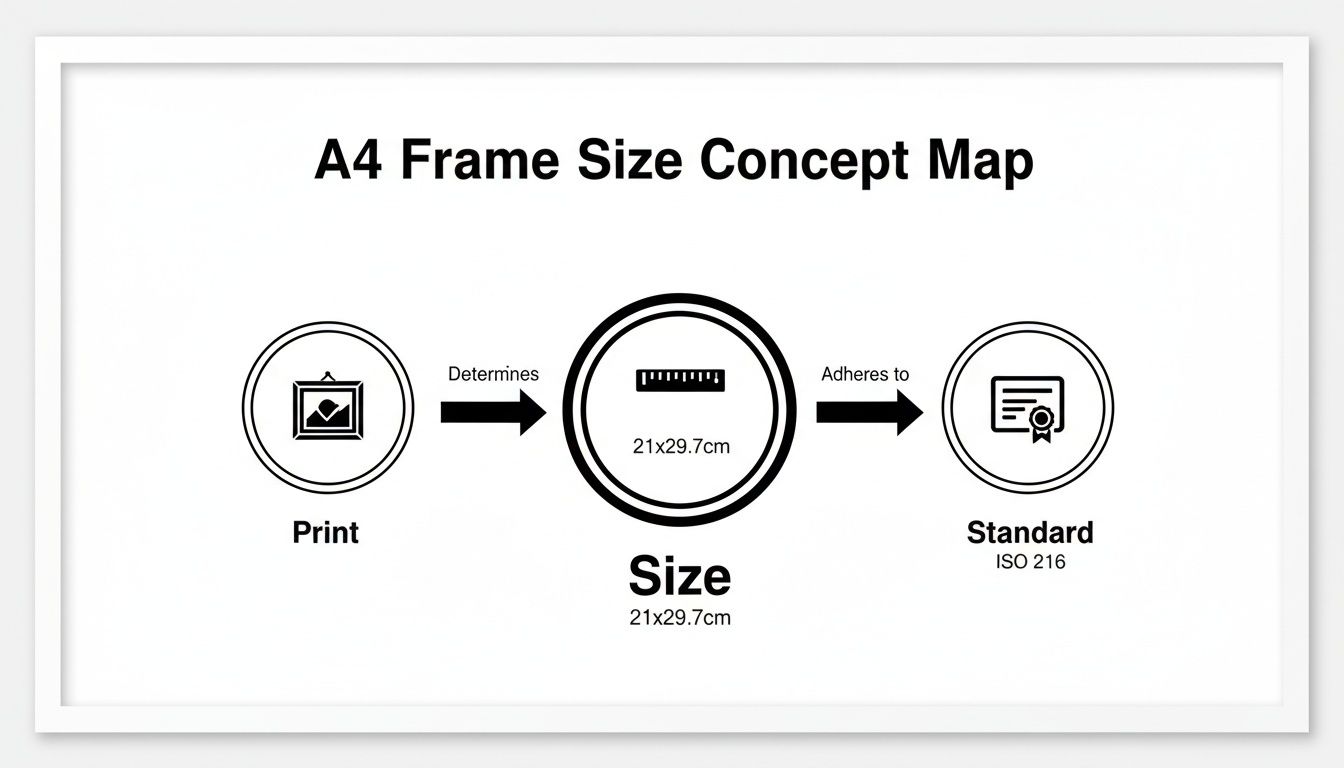
As you can see, the A4 paper size is the essential link between the artwork and a universal standard, which is what guarantees a consistent and predictable fit every time you frame. No guesswork, no dodgy trimming with the kitchen scissors.
The A-Series Explained
The A-series is the go-to standard here in the UK and across much of the world. It’s a beautifully logical system where each size is exactly half the area of the previous one. A1 is half of A0, A2 is half of A1, and so on. A4, our focus here, sits right in that sweet spot – big enough for impact but not so large it takes over the gaff.
Here's a quick rundown of the most common A-series sizes to put A4 into context.
A-Series Paper Sizes at a Glance
| Paper Size | Dimensions in Centimetres (cm) | Dimensions in Millimetres (mm) | Common Use |
|---|---|---|---|
| A2 | 42.0 x 59.4 cm | 420 x 594 mm | Large posters, art prints, window displays |
| A3 | 29.7 x 42.0 cm | 297 x 420 mm | Posters, presentations, charts |
| A4 | 21.0 x 29.7 cm | 210 x 297 mm | Standard documents, prints, letters |
| A5 | 14.8 x 21.0 cm | 148 x 210 mm | Notebooks, flyers, greeting cards |
This system makes scaling designs up or down incredibly simple, which is a massive help for designers and printers alike.
The A4 size has really become a cornerstone for UK printing ever since the ISO standards were widely adopted back in the 20th century. This compact, versatile dimension is perfect for a family business like ours, letting us create everything from music-inspired lyric prints to football club posters that fit perfectly into off-the-shelf frames. It’s the bread and butter of cool wall art.
Why A4 Is The Unsung Hero Of Wall Art
Right then, let's talk about A4. For far too long, it's been unfairly branded as the beige Volvo of the paper world – reliable, sensible, and maybe a little bit dull. Something you'd associate with office memos, dodgy photocopies, or your nan's weekly crossword printout.
But that’s where people get it wrong. In the world of wall art, A4 is the quiet genius in the band that writes all the hits. It's the unsung hero of home decor, the Peter Crouch of paper sizes – surprisingly brilliant and way more effective than you'd think.
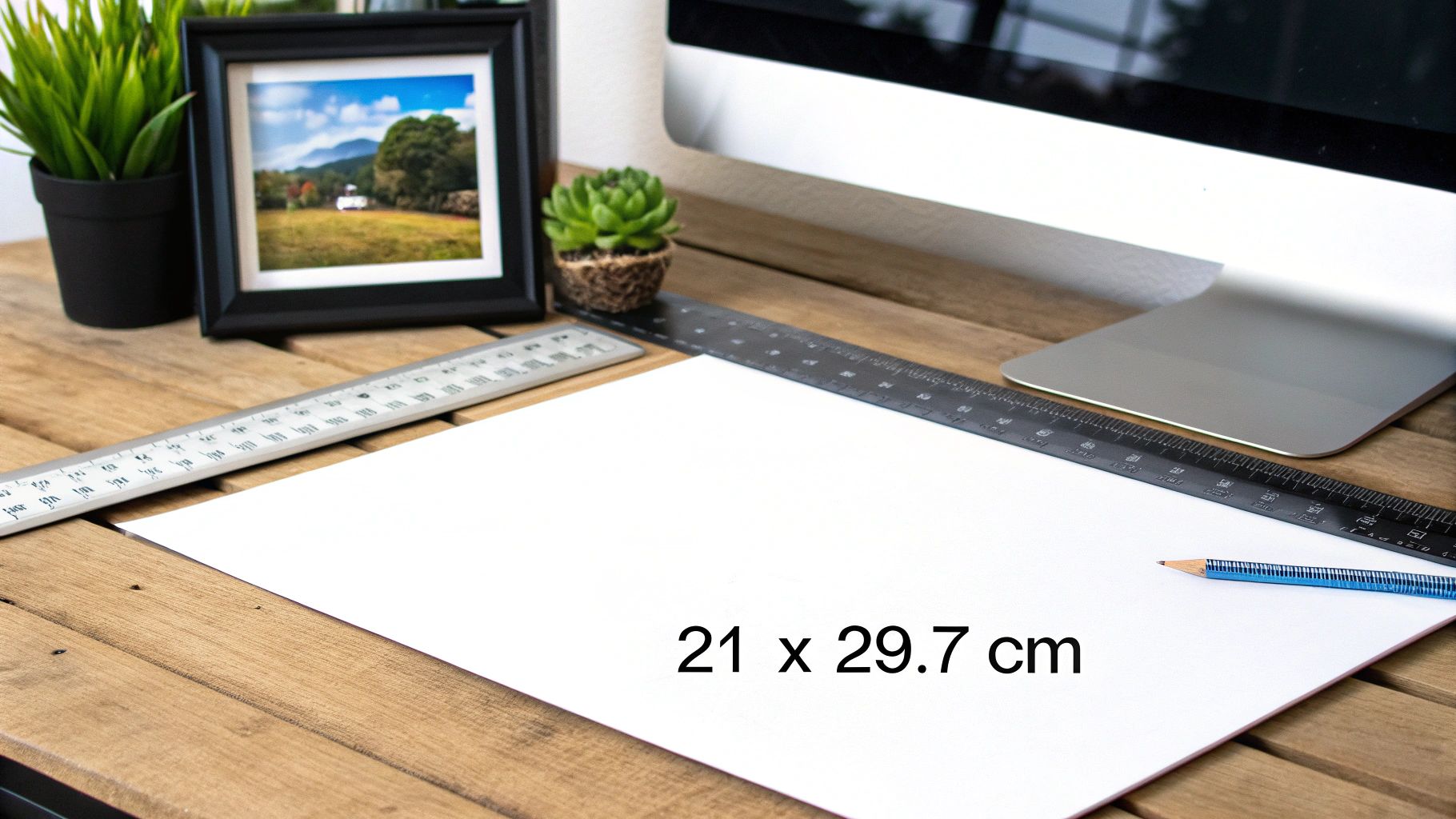
Honestly, it’s the Goldilocks of print sizes. It’s big enough to make a real statement on your wall, but not so massive it completely dominates the room like a prog-rock drum solo that just won't end. This perfect balance makes it the go-to for so many art lovers, football fanatics, and music nerds.
The People's Champion of Prints
The sheer versatility of A4 is where it truly shines. It’s the ideal canvas for creating a gallery wall of your favourite album art, starting a shrine to your team's star striker, or just adding a splash of personality above your desk. It’s a size that just works.
This isn't by accident. The specific dimensions of 21.0 x 29.7 cm have shaped a huge part of UK visual culture, powering everything from gig posters to football memorabilia in a market where custom printing is a multi-billion pound industry. For us at Striped Circle, these dimensions are absolutely spot on for creating high-quality lyric prints and football designs that are both accessible and impactful. You can explore more on the UK's print market trends to see just how big it is.
A4 is the perfect size to let the details of a great design shine through without needing its own postcode. It respects the art, whether it’s a clever lyric from The Smiths or the crest of your beloved club.
It’s small enough for an intimate collection yet bold enough to hold its own. This flexibility is exactly why it's so popular for decorating homes and offices across the country. Think about it:
- Gallery Walls: You can group several A4 prints together to tell a bigger story.
- Desk Art: It’s the perfect size to liven up your workspace without causing clutter.
- Gift Giving: An A4 print is a brilliant, easy-to-frame gift that feels substantial.
It truly is the people's champion of prints, always ready to make your walls look class.
Choosing The Right Frame For Your Print
So, you know the A4 frame size in cm is 21 x 29.7 cm. Easy. But hold on, the job’s not quite done. This is where the real fun starts – the bit where you turn a simple picture into a proper statement piece.
Think of choosing a frame like picking the right band to support your headliner. It’s got to complement the main act, not try to steal the show. A clumsy, overpowering frame can make a brilliant print of Noel Gallagher look like he’s just been handed a ukulele. And we can't have that.
Let's walk through how to get that style chemistry just right for your Striped Circle print.
Match The Vibe
First, take a good look at the print itself. Is it a bold, minimalist lyric print from The Smiths or Pulp? That sort of design practically begs for a sleek, thin black frame. It’s the Johnny Marr to its Morrissey – understated, cool, and absolutely essential. It makes the text pop and lends it a sharp, modern edge that looks class in any room.
Now, what if you've got a retro football poster, maybe celebrating a classic kit or a legendary stadium? A natural wood frame could be its perfect teammate. That touch of wood adds a bit of warmth and a rustic, nostalgic feel, like watching Match of the Day on a grainy old telly.
The goal is to make the print and frame look like they were always meant to be together, like a classic Lennon-McCartney partnership. It’s all about creating a unified piece of art that makes you smile every time you see it.
Of course, the frame also needs to get on with its new housemates: your existing décor. Look at the colours and materials already in the room. A black frame is a pretty safe bet that works almost anywhere, but don't be afraid to experiment with metallics or even a splash of colour if it fits your style. For more advice on this, check out our guide on what size poster frame you might need.
While a traditional frame is a classic choice for a reason, remember there are also many creative alternatives to framing your print that can give it a unique and personal look.
The Great Debate: To Mount Or Not To Mount?
Here we are, at one of the biggest decisions in the framing world. To mount, or not to mount? It sounds like a question from Hamlet, but it’s more important. A mount (sometimes called a mat) is simply that cardboard border sitting between your print and the frame itself. It seems like a small detail, but trust me, it can completely transform the final look.
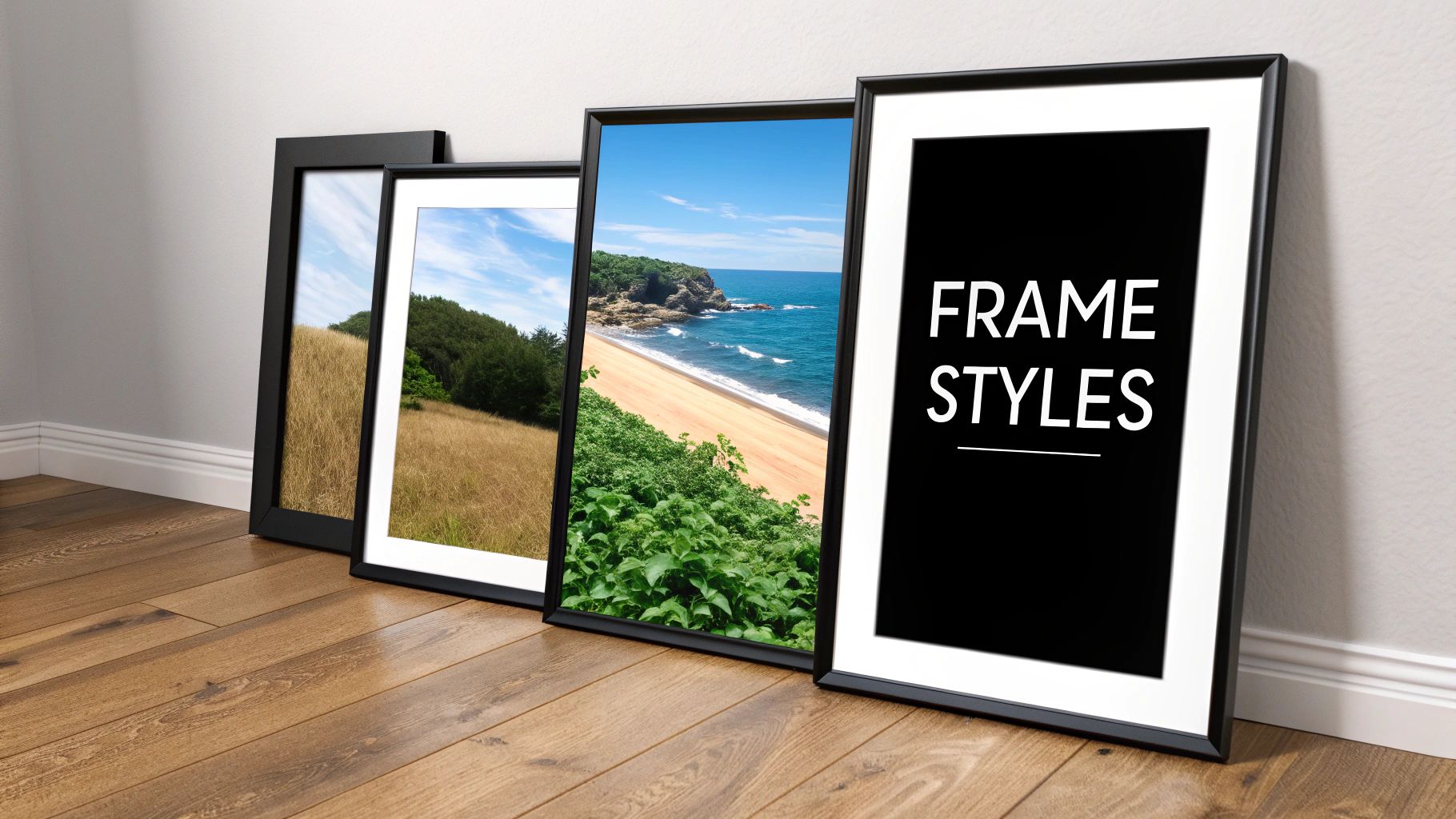
Let's break it down. A mount gives your artwork some much-needed breathing room. It creates a visual pause, drawing your eye straight to the image and making the whole thing feel more polished and professional.
Think of it like the perfect bassline in a classic song. You might not notice it at first, but it adds incredible depth and makes everything else sound—or in this case, look—so much better. It just elevates the entire piece.
Finding Your Style: Gallery Pro or Poster Raw?
So, should you use a mount? It really boils down to the style you're going for. Are you aiming for that high-end, art gallery feel, or something a bit more direct and in-your-face, like a punk rock gig poster?
Using a mount is the fastest way to make an A4 print look like it's worth a fortune. It also serves a practical purpose by separating the print from the glass, which helps protect it over time. It just says, "I've really thought about this."
On the other hand, going mount-less gives you that bold, full-bleed poster look. This approach works brilliantly for loud, graphic prints or vintage film posters where you want the image to scream for attention right to the very edge of the frame. It’s a confident, no-nonsense classic.
Deciding whether to use a picture mount? Here's a simple breakdown to help you choose the right look for your A4 print.
Mount vs. No Mount: A Quick Comparison
| Feature | With a Mount | Without a Mount (Full Bleed) |
|---|---|---|
| Overall Look | Professional, classic, 'gallery' feel. | Bold, modern, direct. |
| Best For | Fine art prints, photography, detailed artwork. | Posters, graphic art, bold typography. |
| Frame Size | You'll need a larger frame (e.g., A3 for an A4 print). | Fits in a standard A4 frame. |
| Protection | Separates the print from the glass, preventing sticking. | Print is in direct contact with the glass. |
| Focus | Draws the eye inward to the artwork itself. | The entire piece makes a statement. |
Ultimately, there's no single right answer. A mount often adds a touch of class, but sometimes a print just looks better without one.
A white or off-white mount is a timeless choice that almost always works, creating a clean, crisp border. But don't be shy about experimenting with a black or even a coloured mount to complement your artwork and make a bolder statement.
My best advice? Think about the print itself and the overall vibe of the room you're hanging it in. For a deeper dive, our guide on how to frame posters is packed with extra tips to help you get it just right.
Getting to Grips with Print Jargon
Alright, let's tackle the technical stuff. Don't worry, I'll keep it simple – this is less about complicated jargon and more about getting your artwork to look its absolute best. When you're printing a piece to fit an A4 frame size in cm, you'll inevitably run into terms like 'resolution' and 'bleed'.
Think of resolution like the quality of a photo. A low-resolution image looks blurry and pixelated when you print it, a bit like watching a football match on a dodgy internet stream. For printing, we measure this quality in DPI, which stands for Dots Per Inch.
For a really sharp, professional-looking A4 print, 300 DPI is the gold standard. It’s the difference between a crystal-clear image and something that looks like it was downloaded from a dodgy website in the 90s.
Then you have 'bleed', which sounds a lot more dramatic than it is.
So, What on Earth is Bleed?
In printing, bleed is just a little bit of extra image or background colour that extends beyond the actual trim edge of your design. It’s a safety margin, really. When the print is trimmed to its final A4 size, this extra bit gets cut off.
Why bother? Because it guarantees your design goes right to the very edge of the paper. Without it, you risk a tiny, unprofessional-looking white sliver along the border if the cutting machine is even a fraction of a millimetre off. Bleed ensures a clean, borderless finish every time.
For a professional result, always aim for 300 DPI and add a 3mm bleed to all four sides of your artwork. This is the secret to making sure your final print looks polished and ready to frame, not like a rushed amateur job.
Getting these two details right from the start is genuinely the key to a great print. It’s what separates a stunning piece of art from a disappointing, blurry mess.
Your A4 Framing Questions Answered
Right, you’ve made it this far, which means you’re well on your way to framing your prints like a pro. But even with the basics down, a few common questions always seem to pop up. Let's clear up some of the usual head-scratchers about A4 frames so you can get your art on the wall with complete confidence.
We get asked these all the time, so let’s get them sorted once and for all.
Will an A4 Print Fit in a 30x40 cm Frame?
Yes, absolutely! This is actually one of the most popular combinations, and for a very good reason. An A4 print, which measures 21 x 29.7 cm, fits beautifully inside a 30x40 cm frame if you use a mount.
The mount (or mat) provides a border, and its opening—the aperture—will be cut perfectly for an A4 sheet. This gives your artwork some visual breathing room, drawing the eye towards the centre and making the whole piece look more substantial and professionally presented. It’s a classic trick to give a smaller print a much bigger presence on your wall.
A4 Frame vs Frame for an A4 Print
This is a cracking question, and the subtle difference in wording catches a lot of people out. It sounds like the same thing, but it’s a classic case of semantics.
- An ‘A4 frame’ is built to hold an A4 print without a mount. The internal dimensions will be exactly 21 x 29.7 cm. Think of it as a straight-up, no-fuss fit where the print goes right to the edge.
- A ‘frame for an A4 print’ almost always refers to a larger frame (like the 30x40 cm one we just talked about) that includes a mount with an A4-sized opening.
So, if you're after that elegant, gallery-style mounted look, you need a larger frame sold 'for an A4 print'. If you prefer a bolder, full-bleed poster style, then a specific 'A4 frame' is what you’re looking for. Simple as that.
Centimetres or Inches: Which is Best?
For A4 paper, you should always stick with centimetres. The entire ISO A-series paper standard, which is the system used here in the UK and across Europe, is based on the metric system. The official dimensions are in millimetres (210 x 297 mm), which translates perfectly to 21 x 29.7 cm.
Trying to use inches gets messy. The imperial equivalent is roughly 8.3 x 11.7 inches, which is just plain awkward. Frames sold in inches are often rounded to neater numbers like 8x12 inches, which won't be an exact match. To avoid any dodgy gaps or the hassle of trimming your print, it's always best to buy a frame that uses the same unit of measurement as your artwork. Stick to metric, and you can’t go wrong.
Now that you’re armed with all the knowledge, it’s time to get those prints on the wall! Find your next masterpiece in the Striped Circle collection and give your home the personality it deserves. https://www.stripedcircle.com
