Game Room Wall Art That Wins Every Time
Right, let's be honest for a moment. That dog-eared poster you've had pinned up since your university days? It’s not 'vintage,' it's a bit of a tragedy. And those sad Blu-Tack marks staining the paintwork are nothing short of a crime against decorating. The right game room wall art is what turns a spare room from a dumping ground into a proper sanctuary—a space that’s all about you.
Your Walls Deserve Better Than a Blu-Tack Museum
Your game room, man cave, or home bar is meant to be your escape. It's a personal shrine to last-gasp winners, iconic albums, and the perfect pint. This is the one place in the house that is unapologetically yours. So, why do the walls so often look like an afterthought, more like a student noticeboard than a curated hall of fame?
Consider this guide your straight-talking mate, the one who’ll tell you it’s time for an upgrade. We’re not here to judge that faded Oasis poster held up by a single, rusty drawing pin (alright, maybe just a little). We’re here to help you create a space that’s bursting with personality—one that makes your friends genuinely envious when they come over. It's time to banish the blank spaces for good.
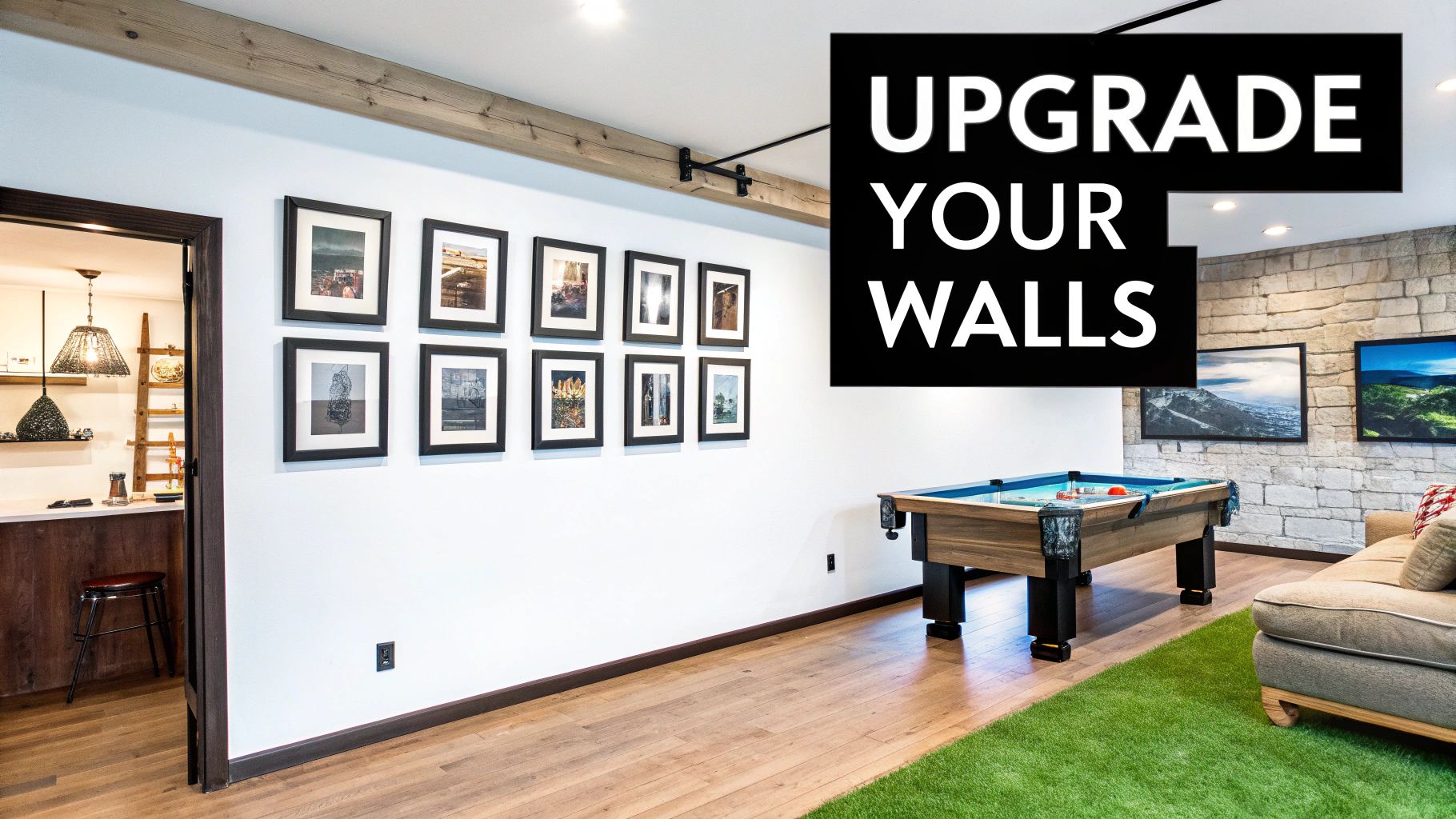
Ditching the Decorating Disasters
Forget about those generic, mass-produced canvases that just scream "I have no imagination." We're talking about curating a collection of incredible prints that actually tell a story. Think less "Live, Laugh, Love" and more "Aguerooooo!" This is your chance to celebrate what really makes you tick.
Your game room is the perfect canvas to display your passions proudly. Whether it’s celebrating a ninety-fifth-minute winner or the guitar solo that changed your life, your walls should be as full of character as you are.
The mission is simple: transform your game room from a neglected corner into the heart of your home. It should be a place where every print sparks a conversation, brings back a memory, or just makes you smile when you see it. In this guide, we'll walk you through everything you need to know to make it happen, including:
- Finding Your Vibe: How to choose a theme that’s genuinely you, not just a cliché.
- Tactical Arrangements: Mastering the art of layout so your collection looks curated, not chaotic.
- The Finishing Touches: Understanding why the right frame and material can make all the difference.
- Setting the Mood: Using clever lighting and placement to make your prints the main event.
Let's get started. It's time to get those walls looking less like a forgotten relic and more like a personal gallery dedicated to the things you truly love.
Finding a Theme That’s Actually You
Alright, let's get down to the fun part: choosing a theme for your game room wall art. This is what separates the legends from the lads who just stick a generic, mass-produced ‘Man Cave’ sign on the wall and call it a day. Your space has more character than that, and it's time the walls showed it.
So, what really gets your pulse racing? Is it the roar of the crowd after a last-minute winner, the opening riff of a song that defined your youth, or the nostalgic bleeps and bloops of a classic video game? This is your chance to inject pure, unadulterated personality into your room. Don’t just decorate; make a statement.
Football Fanatic or Music Maestro
For the die-hard football fan, this is a golden opportunity. Think beyond just slapping the club crest on the wall. Imagine a gallery celebrating your club’s glory days—prints of iconic kits through the years, a legendary manager giving a post-match interview, or even a minimalist design of your home ground’s layout. It’s about capturing the feeling of being a fan.
If music is more your religion, the options are practically endless. Timeless album art is a classic for a reason, but why not go deeper? Think about a stylised print of your favourite lyrics, or a portrait of a guitar god lost in a solo. The goal is to choose pieces that tell a story and spark a conversation every time someone new walks in.
The secret to brilliant game room wall art is authenticity. Choose a piece that tells a story or triggers a memory. Instead of a generic poster, find something that feels like it was made just for you—because, in a way, it was.
Make It Personal and Unique
Your theme should be a genuine reflection of your passions. For wall art that truly reflects your personal passions and achievements, consider personalized options like custom route posters that can map out a memorable journey or marathon. It’s about finding those unique angles that go beyond the obvious.
To get the ideas flowing, think about:
- Iconic Moments: A specific goal, a legendary festival performance, or a key scene from a cult film.
- Subtle Nods: A minimalist print that only true fans would recognise—like a soundwave of a famous chorus or a diagram of a legendary goal.
- Retro Vibes: Embrace nostalgia with vintage-style travel posters of famous stadiums or pixel art from your favourite childhood games.
Ultimately, your theme is what sets the tone for the entire room. Take your time, have a bit of fun with it, and curate a collection that’s 100% you. For more inspiration on building out your sanctuary, check out our guide to brilliant man cave decorating ideas.
Mastering the Art of Layout and Sizing
So, you’ve picked out your prints. Brilliant. But before you start hammering nails into the wall, let’s talk strategy. Getting the size and placement right is what separates a professional-looking space from a chaotic mess. It’s the difference between a thoughtful design and just… stuff on a wall.
This is where you make a key decision. Are you going for one massive, statement piece that commands the room? Or are you building an eclectic gallery wall that tells a richer story, a bit like the B-side of a classic album? Both are fantastic options.
A single, large print – think a panoramic view of Anfield or a bold, oversized lyric piece – creates an immediate focal point. It's confident, it's decisive, and it works wonders for drawing the eye to a specific zone, like above the sofa where you collapse after a contentious VAR decision. A gallery wall, on the other hand, is your chance to really show off your personality. It’s a mixtape of your passions, blending your love for Oasis with your lifelong devotion to your football club.
The Big Decision: A Solo Headliner or a Full Festival Lineup?
Choosing between a solo act and a full-band approach really comes down to your space and your personal style. A massive print can make a smaller room feel bigger or anchor the decor in a larger one. A gallery wall is perfect for filling a big, empty space and has the added bonus of being able to grow with your collection over time.
This simple process shows how to approach curating your theme, whether you're choosing a single showstopper or an entire collection.
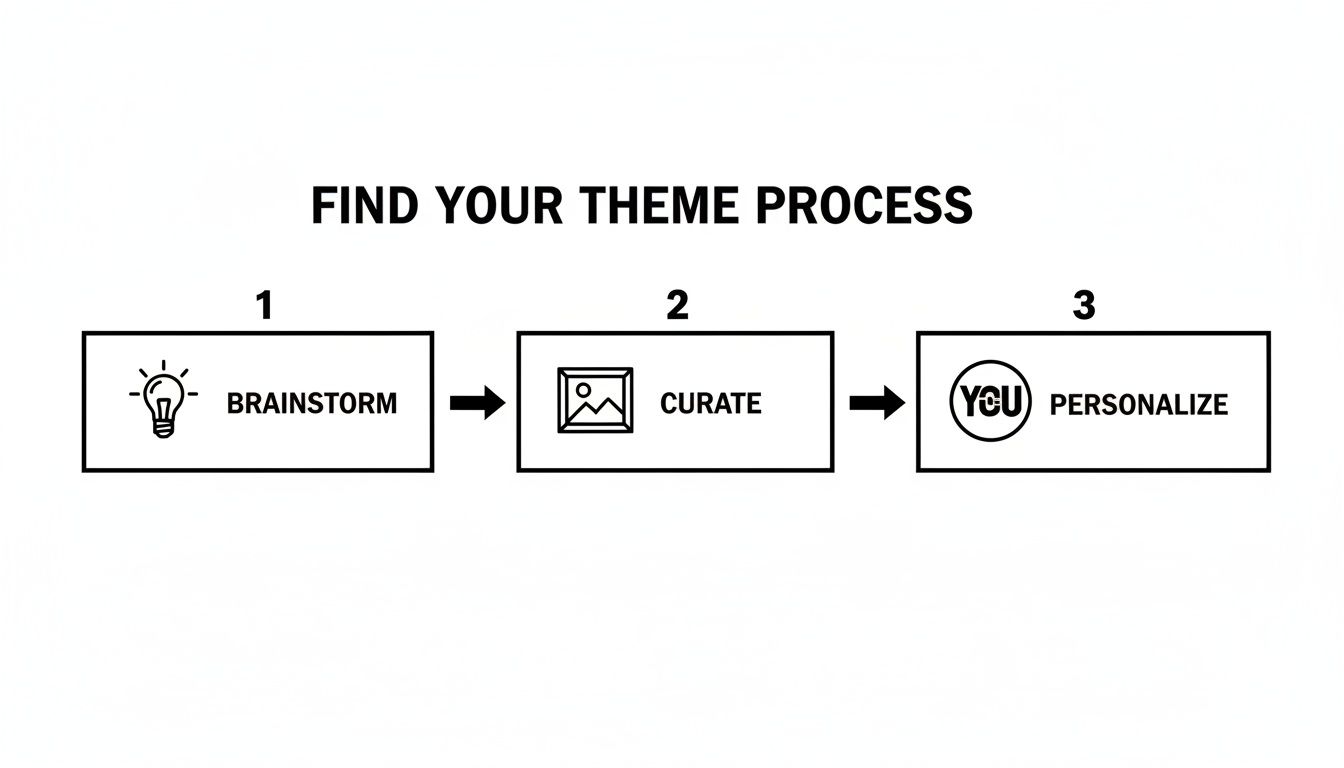
The idea is simple: start with what you love, curate it thoughtfully, and always make sure the final selection feels like you.
It’s no surprise that personalising our homes has become so important. The UK wall art market was valued at an incredible USD 3.32 billion in 2024, proving that people are more invested than ever in making their spaces unique. It seems we’ve all realised that thematic art in rooms like these genuinely makes them better places to be. What's interesting is that over 60% of sales still happen in physical shops, as people still value seeing the quality of a print up close before they buy.
Getting the Hang of It
Once you’ve settled on your approach, it’s time to get practical. Follow these golden rules to make sure your art looks deliberate, not like an afterthought.
-
Mind the Height: The most common mistake is hanging art too high. As a rule of thumb, the centre of your piece (or the centre of the entire gallery arrangement) should be at eye level – roughly 145-152 cm from the floor.
-
The Furniture Gap: When hanging art above a sofa, sideboard, or desk, leave a gap of about 15-20 cm between the top of the furniture and the bottom of the frame. This connects the two pieces visually.
-
The Spacing Secret: For gallery walls, consistency is everything. Keep the space between each frame the same, usually around 5-10 cm. This little detail prevents the whole thing from looking cluttered and messy.
My Top Tip: Before you commit, lay all your frames out on the floor and play with the arrangement until it feels right. Even better, trace the frames onto paper, cut out the templates, and tape them to the wall with masking tape. It’s a bit of extra effort, but it guarantees a perfect result with no misplaced holes.
Nailing these simple techniques will make your game room wall art look like it was curated by an expert. For a more detailed guide to creating the perfect arrangement, have a look at our post on how to arrange wall art.
Choosing Frames and Materials That Make an Impact
Think of your print as the star player – the one scoring the goals and grabbing the headlines. The frame? That’s the unsung hero, the reliable defender that holds the whole team together.
Putting a brilliant piece of art in a cheap, flimsy frame is like sticking a Premier League winner’s medal in a crisp packet. It just feels wrong. This is where you nail those crucial finishing touches.
Choosing the right frame for your game room art is about more than just protection; it’s about amplifying the entire vibe. A retro football print celebrating a classic kit, for instance, might look absolutely class in a simple, traditional wooden frame. On the other hand, a modern, graphic music poster could really pop in a sharp, minimalist black one.
It's all about creating a partnership that works. You wouldn't pair a heavy metal print with an ornate gold frame... unless you were going for a very specific, and slightly mad, look.
Beyond the Frame Game
Now, let's talk about the prints themselves. What’s the real difference between a high-quality giclée print and a standard poster you’d buy at a gig? In short, a lot. It’s like comparing a Champions League final to a pre-season friendly.
Giclée prints use archival-quality inks on acid-free paper, which means the colours stay vibrant for decades without fading. Your standard poster might look great at first, but it can start to yellow faster than a referee dishing out cards in a derby match. That paper quality really does matter if you want your art to last.
Think of it this way: a quality print on proper paper is an investment. It’s the art equivalent of buying a season ticket instead of just turning up for one match. It’s a commitment to quality that pays off for years to come.
Understanding these details helps you choose art that not only looks fantastic but also stands the test of time. It seems we’re all waking up to this, with projections showing the UK wall art market will grow at a 6.3% CAGR from 2025 to 2035. This growth is largely driven by a shift towards durable, high-quality pieces that last, as more of us realise that personalising our spaces with things we love is good for our well-being. You can read more about these growing trends in home decor if you fancy a deeper dive.
Making smart choices on materials ensures your art is protected and looks brilliant for years. If you're looking for guidance on the nitty-gritty of getting it just right, check out our detailed advice on how to frame posters for a flawless finish.
Lighting Your Art for Maximum Glory
You wouldn’t stick your star player on the bench during the final, so why leave your incredible game room wall art lurking in the shadows? Getting the lighting right is the secret weapon, the tactical masterstroke that transforms great prints into the main event. It’s what makes the colours in your favourite album art pop and the details in a stadium print feel like you’re right there in the stands.
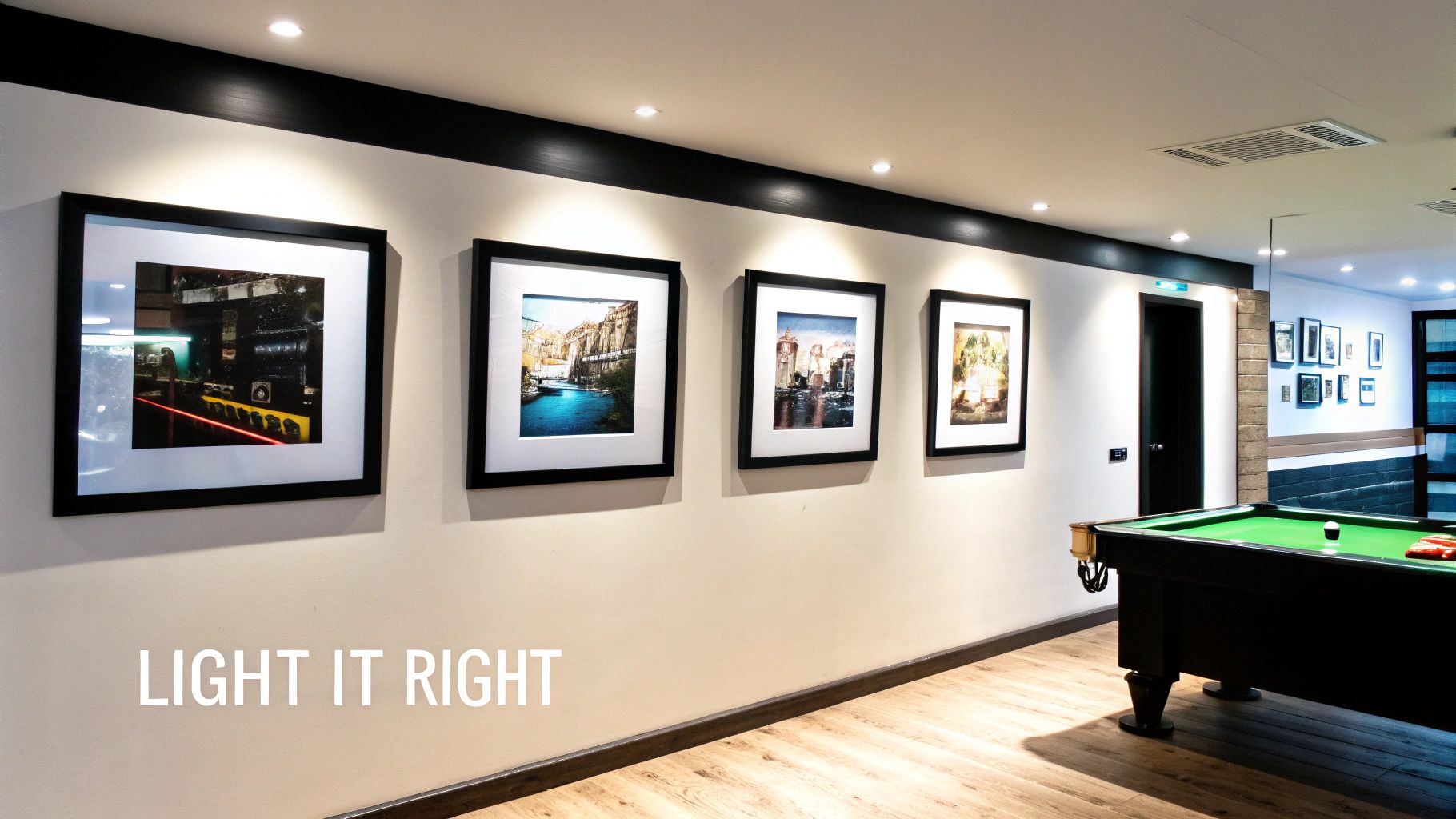
The good news is you don’t need to call in an electrician and remortgage your house to achieve it. Simple, clever lighting can make all the difference.
Think about a couple of small, directional spotlights aimed at a key piece, or the ambient glow from an LED strip tucked behind your TV or console setup. These little touches create a proper atmosphere.
Where You Hang It Matters
It’s not just about which wall you choose, but where on the wall you place your art. Great placement guides the eye and stops your collection from feeling like a random jumble. I always suggest thinking about creating different zones in the room.
- The Main Event Zone: This is for your undisputed champion piece. Hang it above the sofa, the bar, or the pool table—wherever people naturally gather. It’s the focal point, the headliner of your collection.
- The Gallery Zone: Got a bigger wall? This is perfect for a gallery of your football memorabilia or a collection of your favourite band prints. It tells a story and shows off the full range of your impeccable taste.
- The Supporting Acts Zone: Don't neglect smaller spaces like hallways or the wall behind the door. A series of smaller, related prints here can be a brilliant surprise and add depth to the room.
My top tip is to avoid direct sunlight at all costs. It's the arch-nemesis of prints, causing colours to fade faster than your team's title hopes after a bad run of form. Keep your prized art out of the glare.
Beyond lighting your artwork, managing the natural light entering the room is just as important for both the atmosphere and protecting your art. Understanding the differences between light filtering vs. blackout shades can be a game-changer. Controlling natural light helps maintain the mood and keeps your art looking its best for years.
To help you decide where different types of art might work best, here’s a quick rundown of common spots in a game room.
Quick Guide to Game Room Art Placement
| Location in Room | Best Art Style | Top Tip |
|---|---|---|
| Above the Sofa | Large single piece or a symmetrical gallery wall. | This is prime real estate. Make it a statement about your passions. |
| Over the Bar/Snack Area | A collection of smaller, themed prints. | This is a great spot for fun, conversational pieces. |
| Main Gaming Station | LED-backlit art or vertical prints flanking the screen. | Choose art that enhances the tech vibe without being distracting. |
| Pool/Dart Board Wall | A durable, framed gallery of various sizes. | Ensure it's hung high enough to avoid accidental bumps or knocks. |
| Hallway/Entrance | A series of uniform, smaller prints. | Create a 'walk of fame' feel leading into the main space. |
Think of this table as your playbook for placing art with purpose, ensuring every piece contributes to the room's overall feel.
A Market That's Seeing the Light
It’s clear that we’re all getting more invested in making our walls look the business. The UK wall art market revenue is projected to hit a massive USD 5,500.4 million by 2030. Interestingly, wallpapers and wall coverings grabbed the biggest slice of the pie in 2022, mainly because they’re affordable and easy to install—perfect for renters who want to add personality without losing their deposit.
Finally, just be practical. Avoid hanging your favourite print where it’s likely to get hit by a stray dart or knocked by someone celebrating a last-minute goal a bit too enthusiastically. Keep it glorious, but keep it safe.
Your Wall Art Questions, Answered
Alright, so your head is probably buzzing with ideas for themes, layouts, and lighting. But before you start drilling holes, you might have a few last-minute questions. That's completely normal. We’ve pulled together the most common ones we hear about kitting out a game room, so you can get it right the first time.
How Do I Create a Gallery Wall That Doesn't Look Messy?
The secret to a gallery wall that looks intentionally cool rather than chaotic? It’s all in the prep work. Start by choosing a common thread—this could be a consistent colour palette (like classic black and white prints) or a specific theme that makes everything feel connected.
Before you even touch a hammer, lay all your framed prints out on the floor. Seriously, don't skip this step. Shuffle things around until the arrangement feels balanced and just looks right. A great tip is to anchor the layout with a larger, central piece and then build the smaller ones out from there. And for a truly professional finish, keep the spacing between each frame consistent.
What's the Best Art for a Room with Low Light?
In a darker, moodier space, you need art that brings its own light and energy to the party. The trick is to opt for prints with bright, bold colours and plenty of contrast. Think graphic prints, minimalist designs with lots of clean white space, or even art with neon elements that pop in the dim light.
Steer clear of pieces that are too dark or have lots of intricate details, as those subtleties will just get swallowed by the shadows. The finish matters, too. A print with a glossy surface can be a game-changer; place it under a small spotlight and it’ll bounce light around the room, making the whole area feel more vibrant.
Can I Mix Different Themes, Like Football and Music?
Absolutely! It's your space, and it should reflect everything you're passionate about. The key to successfully mixing themes like football and music without it looking like a random jumble is to find a visual link that ties them together.
A shared colour scheme is the simplest way to pull this off. Imagine pairing your favourite album art with iconic football moments, but everything is in striking black and white. Or, you could use the exact same frame style for every piece to create a unified, gallery-like feel.
Another way to approach it is by creating dedicated 'zones'. You could have one wall that pays tribute to your musical heroes and another that celebrates your club legends. This keeps things feeling organised while letting you show off all sides of your personality. It's about telling your story.
How High Should I Hang My Pictures?
This is the one nearly everyone gets wrong. There's a tendency to hang art way too high, leaving it floating awkwardly near the ceiling. The golden rule is simple: hang your art so the centre of the piece (or the middle of a gallery wall) is at eye level. For most people, that's somewhere between 145-152 cm (57-60 inches) from the floor.
If you’re hanging art above furniture, like a sofa or a gaming desk, leave a gap of about 15-20 cm (6-8 inches) between the top of the furniture and the bottom of the frame. This visually connects the two, making the whole setup feel balanced and grounded.
Ready to banish those blank walls for good? At Striped Circle, we have a huge range of unique music and football prints that are perfect for creating a game room with serious personality. Find your next masterpiece at https://www.stripedcircle.com.
