
Kids Room Wall Art: A Diplomatic Guide to Dodging Decor Disasters
Choosing the right kids room wall art is less about interior design and more about high-level negotiation. It’s a delicate dance between their latest obsession (which will change by Tuesday) and your desperate plea for something that doesn't make your eyes water. Think of it as your first creative collaboration – a mission to unleash their personality without sacrificing your sanity or the house's overall vibe.
Moving Beyond Mass-Produced Murals
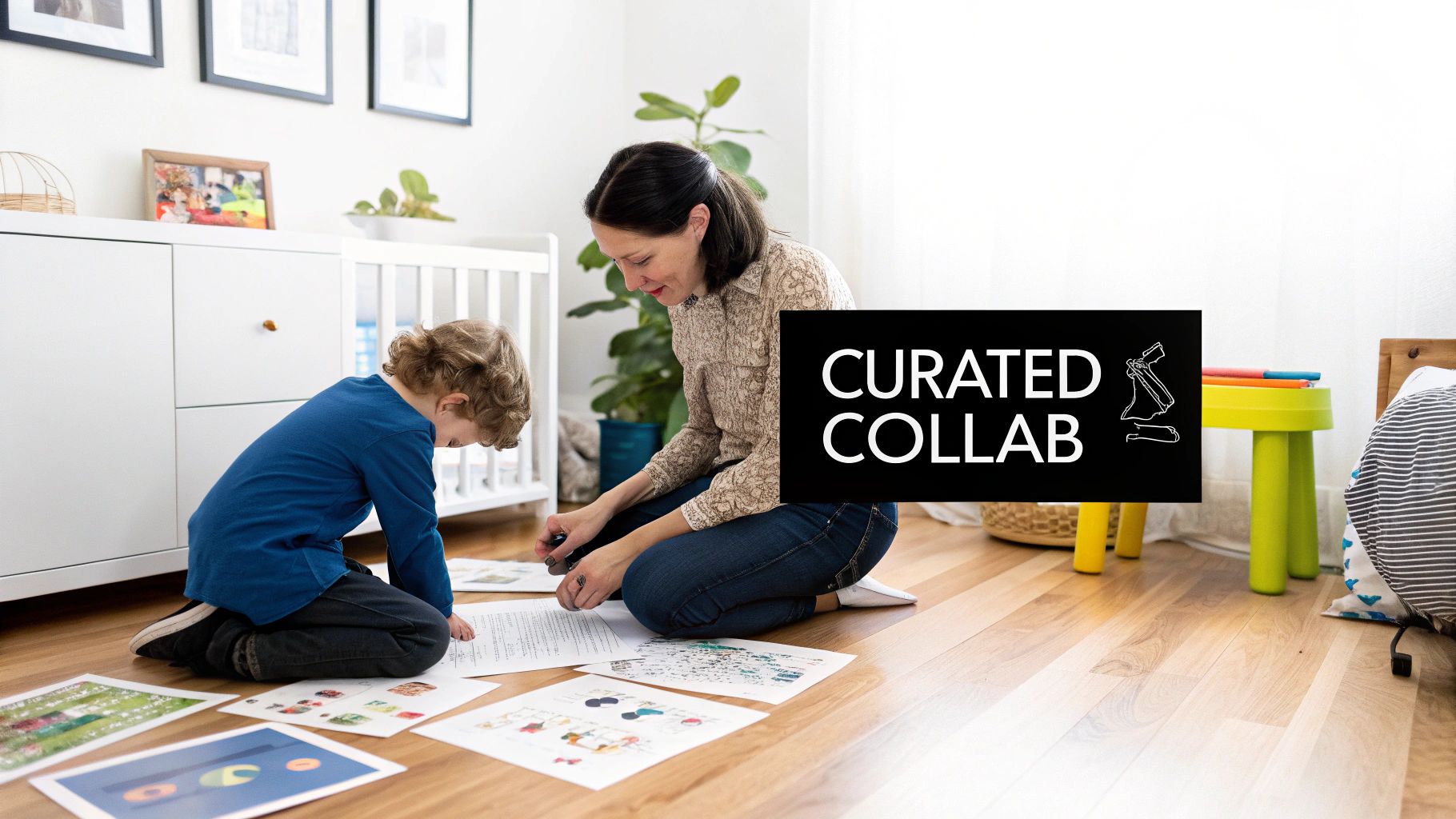
Let's be brutally honest. The minute you say, "Let's decorate your room," you've entered a diplomatic minefield. On one side, you have your kid, whose current world revolves around a cartoon character with a questionable catchphrase or a pop star whose entire wardrobe appears to be made of glitter.
On the other side is you, trying to steer the conversation away from a life-sized mural of said pop star. Before you surrender and agree to something you’ll resent for years, let’s reframe the mission. This isn't just about covering magnolia paint. It's about curating a little corner of the world that's genuinely them, while subtly teaching them that great style doesn't have to come in a blister pack.
Finding the Perfect Middle Ground
The secret sauce is finding the overlap between their passions and genuinely cool design. Love a certain band? Instead of a glossy poster ripped from a magazine (and stuck up with Blu-Tack, the mortal enemy of paint), how about a slick, minimalist print of their best lyric? Is your kid football-mad? Ditch the full-kit action shot and go for a vintage-style print of their home ground or a stylised team crest. It’s got ten times the class and won't age like a dodgy 90s haircut.
Think of it like a really good cover song. It’s a fresh, clever take on something they already love, but with a bit more artistic merit. Crucially, it won't make the rest of your house look like it’s having an identity crisis.
This approach means the décor can grow with them. A subtle movie quote or a stylised graphic from their favourite video game has a much longer shelf life than a character they'll cringe at next year. It’s a win-win: they get a room that feels totally theirs, and you get a space that doesn’t demand a full re-plaster every time their interests change. For more ideas on getting started, our guide on how to decorate walls has some top tips.
The key is to embrace their world but see it through a cooler, more creative lens. Here’s how you can translate those fleeting obsessions into lasting style:
- For the Music Lover: Sidestep the standard merch. Think alternative lyric prints, abstract art inspired by their favourite album covers, or even a stylised gig poster.
- For the Sports Fanatic: Look for retro stadium designs, minimalist club crests, or typographic prints of famous chants. Proper fans' stuff.
- For the Gamer: Find subtle prints of iconic in-game symbols, locations, or quotes that only a true fan would get. It’s their secret handshake, on a wall.
This way, you’re not compromising; you're collaborating. You're the cool producer to their rockstar vision.
Choosing a Vibe That Grows with Them
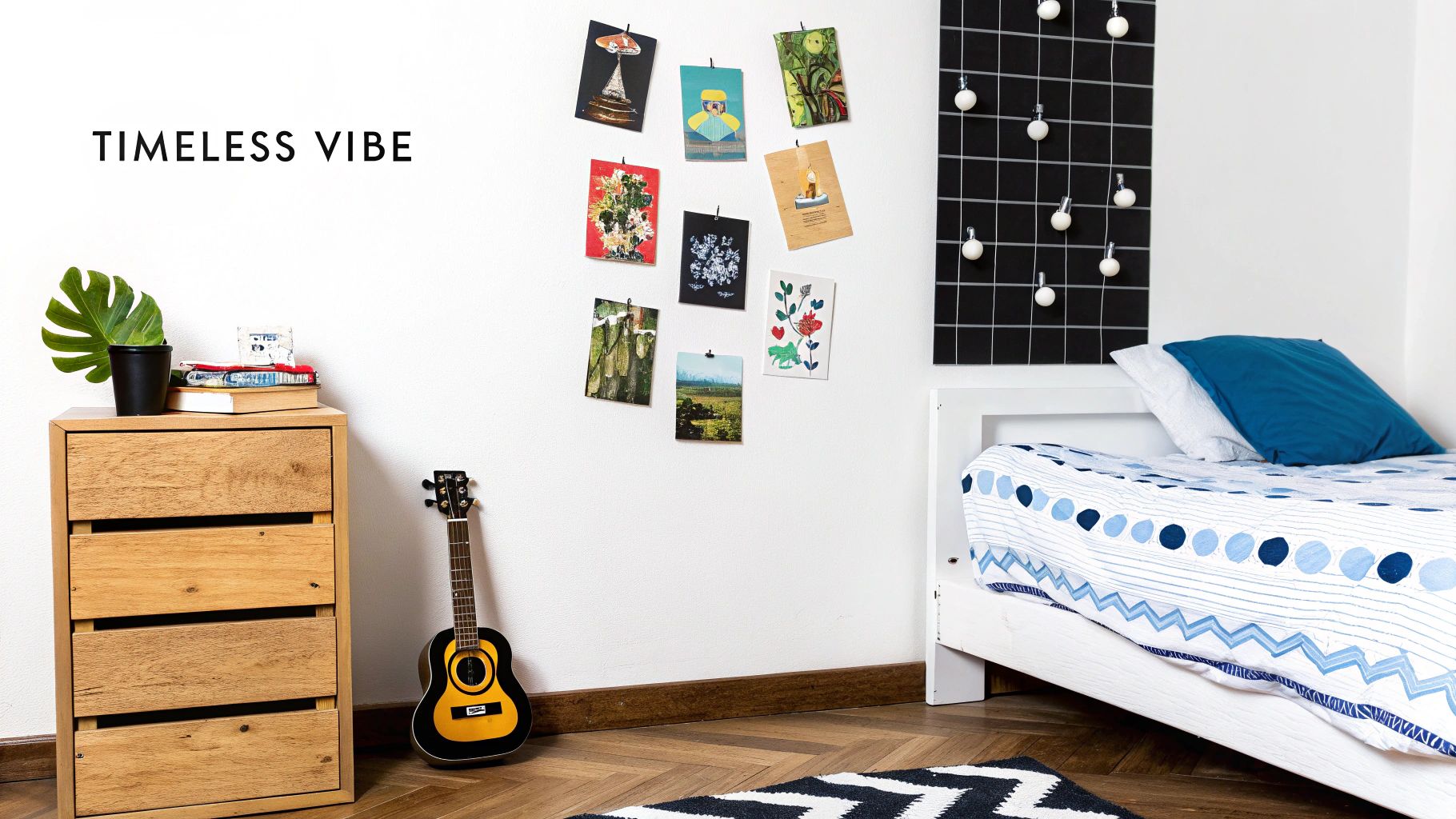
Let’s face it, those rigid, off-the-shelf "themes" have the lifespan of a pint of milk in the sun. Dinosaurs are brilliant, obviously, but a full-on Jurassic Park bedroom might feel a bit childish by the time they discover The Stone Roses. The secret is to think less about a theme and more about a vibe.
So, what's the difference? A theme is a straitjacket; a vibe is a feeling. It’s about capturing their personality without boxing them into one specific interest that might be ancient history next month. Is your kid a future festival headliner in training, a budding naturalist who knows every local bird, or a mini sports commentator who can reel off last season’s stats?
That’s your starting point. You’re building a cohesive style that’s cool, not cliché, using kids room wall art that can evolve right along with them.
Finding Inspiration in Unexpected Places
The best ideas are rarely found in the kids' decor aisle. You’ll find much richer inspiration by looking at the things they genuinely love right now.
-
The Music Obsessive: Got an Oasis fan in the making? Take their iconic Definitely Maybe album cover and build your room around its black, white, and red colour palette. A bold, monochrome scheme with pops of colour from a few well-chosen lyric prints creates an instant Britpop feel without plastering Liam Gallagher’s face everywhere.
-
The Football Fanatic: Instead of the latest garish kit, dig out their team’s retro shirts from the 90s. Those bold patterns and unique colour combinations are a goldmine for a room's colour scheme. Pair those colours with a minimalist print of the stadium or a classic chant, and you’ve created a space that nods to their passion with a bit of class.
This approach makes the space feel far more personal and stylish. You’re validating their interests by showing them they’re cool enough to inspire an entire room, just in a more considered, grown-up way.
By focusing on colour palettes and subtle references, you're curating a backdrop for their life, not just decorating for their current phase. The art becomes the lead singer, tying the whole vibe together.
Involve Them in the Grand Design
Getting your child involved is the best way to make the space truly feel like their own. But asking a seven-year-old "what theme do you want?" can quickly descend into chaos and demands for a slime-based colour scheme. A better way is to guide the conversation. Show them different prints, textures, and colour ideas based on what you already know they love.
For a really collaborative approach, you could try something like a Dream Room 3D Adventure, which lets them visualise and play around with designing their ideal space, including the wall decor. It turns the whole process into a fun project you can do together.
It's no surprise that parents are putting more thought into these spaces. The UK market for kids' furniture and décor hit a massive USD 2.33 billion in 2023, largely because we want to create environments that really support their development.
The end result is a room that feels completely authentic to them, filled with smart, stylish art that reflects who they are right now—and who they might be next.
Mastering the Kids Gallery Wall
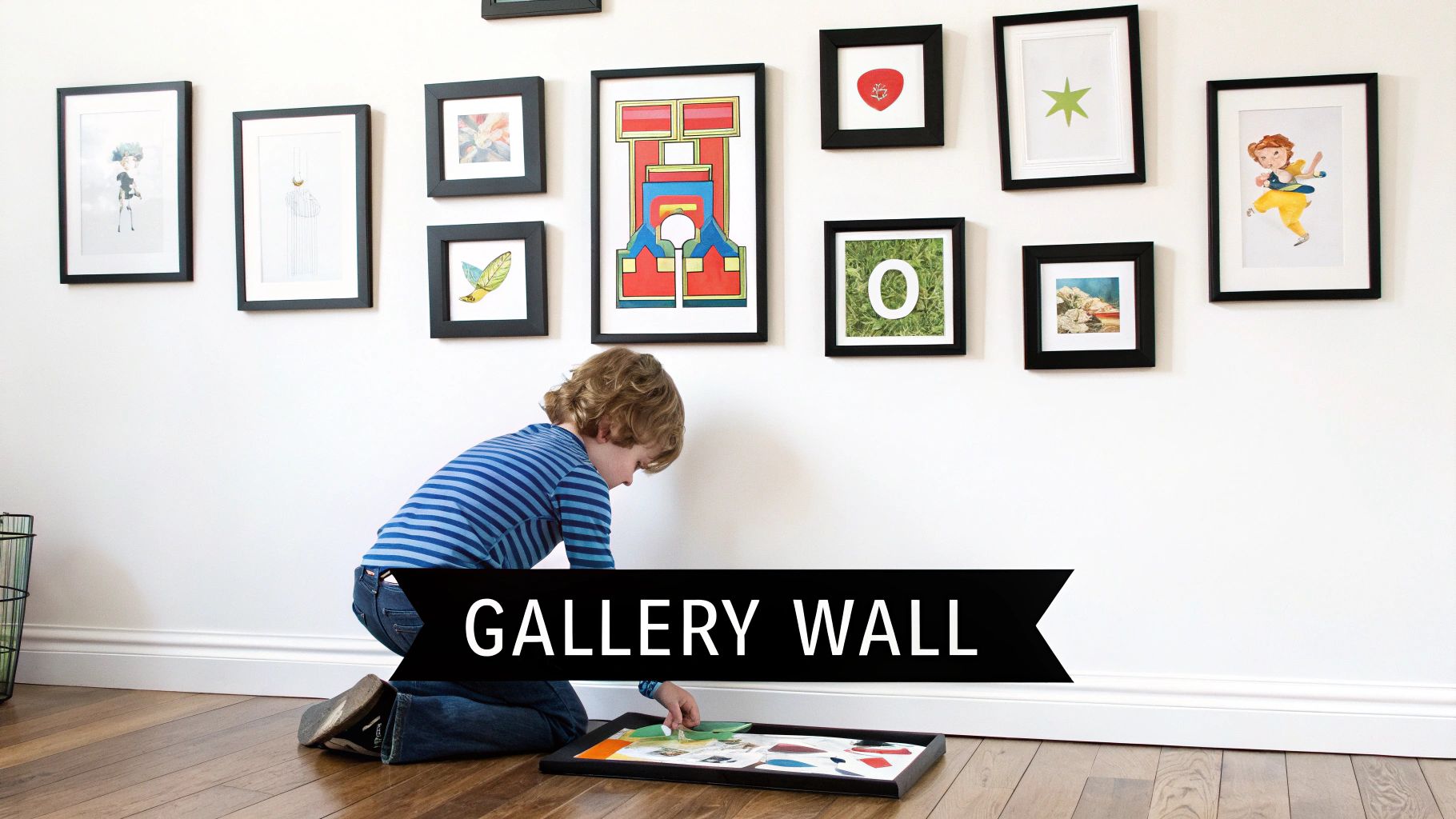
A gallery wall is the greatest diplomatic tool in the parental arsenal. It's the perfect way to sidestep a full-blown argument over which single, giant poster gets pride of place. Think of it as a mixtape for their wall—a curated collection of cool art prints, family photos, and their own crayon-based masterpieces, all living together in perfect harmony.
When you get it right, a gallery wall tells a story. It’s a visual snapshot of their personality, mixing a vintage football programme with a cool band poster and that abstract painting they did last week that you’re pretty sure is genius. The trick is making it look curated and cool, not like the contents of their art folder just exploded.
This is your chance to blend your style with theirs. You can create a collection of kids room wall art that feels both personal to them and pleasing to your own eye. It’s all about the mix.
Planning Your Layout Like a Pro
Before you even think about picking up a hammer, lay everything out on the floor. Seriously. Don't skip this step unless you want your wall to look like a game of Tetris gone wrong. It’s the only way you'll see how the different sizes, shapes, and colours work together without turning your pristine wall into Swiss cheese.
First, pick your 'hero' piece. This is your headliner, the main act. A bold typographic print or a large, striking graphic usually works brilliantly for this. I find it’s best to place it slightly off-centre; it just creates a more dynamic and interesting layout.
Once your hero is in place, start building around it with the supporting acts. A good gallery wall has a mix of orientations—some landscape, some portrait—to keep the eye moving. Don't be afraid to mix and match frame styles, but try to find a common thread that ties it all together.
A top tip I've learned is to use a single, consistent colour to link otherwise disparate pieces. A splash of the same vibrant yellow or cool blue appearing in three or four of the prints can make the whole arrangement feel cohesive, even if the subjects are completely different.
Getting the Mix Just Right
A great gallery wall is all about balance. It’s not just about what you hang, but how you combine it. To avoid a cluttered look, try to keep the spacing between your frames consistent—about two to three inches usually does the trick.
Here are a few combinations that are always on the team sheet:
- The High-Low Mix: Combine a high-quality art print with your child's own drawings. Framing their art gives it instant gravitas and makes them feel like a proper artist. Plus, it's hilarious.
- The Timeline Touch: Weave in personal photos that show their journey. For a truly personal touch, you could create a visual timeline with a beautiful guide to 12-month baby picture frames, creating a lovely sentimental anchor point.
- The Text and Image Combo: Mix graphic prints and photographs with text-based art, like a favourite song lyric or a funny quote. This adds another layer of personality and visual interest.
Getting the arrangement right can seem daunting, but it’s more art than science. For a deeper dive into different layout options, check out our guide on how to arrange wall art. At the end of the day, the goal is to create a wall that’s as unique and interesting as they are.
Creative and Interactive Wall Decor Ideas
Right, let’s be honest. Static, framed prints are brilliant, but sometimes a kid's room needs a bit more energy. Wall art for kids doesn't just have to be something you look at; it can be something they do. This is where we get a bit clever and turn their walls into a space that’s both fun for them and ridiculously practical for you.
Forget the Blu-Tack and the dog-eared posters that look like they’ve survived a particularly messy festival. A far cooler solution is using magnetic poster hangers. These simple wooden strips let you swap out prints in seconds. So, when their undying allegiance to one band dramatically shifts to another overnight, you can make the change faster than a guitarist doing a costume change backstage.
Art That Does More Than Just Look Good
We can also push the idea of what kids room wall art even is. Think beyond the frame. High-quality, removable wall decals can create a massive impact without the long-term commitment (and sheer faff) of wallpaper. You could create a huge, graphic soundwave from their favourite song or a silhouette of a legendary footballer scoring a blinder.
It’s about making the art part of the room’s experience. Another great shout is art that educates without being boring—and I don’t mean a laminated periodic table. A stylised alphabet print where each letter is inspired by an iconic album cover? Yes, please. Or a beautifully designed world map that highlights famous football stadiums instead of just capital cities.
This approach transforms the walls from a simple backdrop into an engaging, evolving part of their world. It’s decor that sparks conversations and reflects their interests in a smart, interactive way.
The goal is to find decor that evolves with their ever-changing passions. It’s less about a permanent installation and more about creating a flexible canvas that reflects who they are this week, next month, and next season.
In fact, the trend of interactive decor is growing. Educational settings in the UK now see wall art as a vital tool for improving learning, with plans to integrate technology like QR codes linked to quizzes. It highlights a move away from purely decorative art towards something more engaging. You can read more about how wall art is being used in schools on promoteyourschool.co.uk. This shows that making walls interactive isn't just a fun idea—it's a genuinely brilliant one.
How to Hang Prints Without Starting a Family Feud
Right, you’ve picked the prints, planned the layout, and achieved a fragile peace treaty. Now for the final boss battle: getting the art onto the actual wall. This is the moment a fun family project can descend into a tense DIY standoff, complete with muttered curses and wonky frames.
But it doesn't have to be a domestic disaster. With the right approach, you can hang your kids room wall art like a seasoned roadie, saving you stress, arguments, and a future trip to B&Q for a massive tub of wall filler.
First things first, get your tools in order. A tape measure, a pencil, and a spirit level are your holy trinity. Don’t just eyeball it. Ever. No one’s eye is that good, not even after three cups of strong tea.
Choosing Your Weapon: Hooks vs. Strips
The great debate in the hanging world is traditional picture hooks versus modern, damage-free command strips. Honestly, there’s a place for both.
-
Traditional Hooks: For heavier, glass-fronted frames, you can't beat the security of a proper nail and hook. They’re solid, reliable, and give you peace of mind that the art isn’t going to stage-dive off the wall during a late-night kickabout in the bedroom.
-
Command Strips: For lighter prints, and for anyone in a rented home, these are a total game-changer. They’re perfect for creating a flexible gallery wall that can be changed without leaving a single mark. Just make sure you get the right size for the weight of your frame – they’re not all created equal.
If you want a deeper dive into getting frames ready for the wall, check out our simple guide on how to frame posters.
The Golden Rules of Spacing and Safety
Perfect spacing is the secret ingredient that makes a gallery wall look slick rather than sloppy. A good rule of thumb is to keep about two to three inches between each frame. This creates a sense of cohesion, even if the art itself is wildly different. It just helps the eye make sense of it all.
And let’s talk safety, especially in a younger child’s room. Never, ever hang heavy frames directly above a bed or cot. It’s just not worth the risk. Position them on a different wall or, better yet, opt for lightweight, unframed prints or fabric wall hangings in that area instead.
The infographic below shows an easy process for keeping your art fresh and interactive, from choosing to hanging and swapping.
This simple 'choose, hang, swap' method, especially with magnetic hangers, is a brilliant, fuss-free way to keep their room's decor evolving as they grow.
The UK's passion for decorating isn't slowing down, with the wall art market hitting USD 3.60 billion in 2022. A huge chunk of that—over 34%—came from products like stickers and wall coverings, showing just how much we love decorative and functional options for our walls. You can find more details about the growing UK wall art market on grandviewresearch.com.
Now, get that art up and put the kettle on. Job done.
Common Questions About Kids' Room Wall Art
Alright, you’ve got a head full of ideas and you're ready to get started. But maybe a few practical questions are still buzzing around. That’s completely normal. Let's tackle some of the most common queries we hear about choosing and hanging art in a kid's room.
Think of this as the final piece of the puzzle – a few expert tips to make sure you get it just right and create a space that both you and your child will adore.
How Often Should We Change the Art?
Honestly, there’s no hard and fast rule for this one. It's less about a strict schedule and more about tuning into your child. When their tastes shift—and they will, faster than a Premier League manager getting sacked—the art should follow suit. That poster of a pop star they once idolised might suddenly become "so last year," and that's your cue.
A great, low-effort approach is to do a small refresh. Swapping out a print or two every six months can breathe new life into the space without it feeling like a massive project. This is where those magnetic hangers or picture-hanging strips really earn their keep; you can make a change in minutes.
The goal is for the room to feel like theirs. When the art on the walls no longer reflects who they are right now, it’s simply time for an update. It’s a natural evolution, not a decorating mistake.
This ever-changing nature is part of what makes decorating a kid's room so much fun. It’s a living space that tells their story as it unfolds.
How High Should I Hang the Artwork?
This is a fantastic question, and the answer really depends on their age. For younger children, the key is to hang art at their eye level. You want them to be able to see and connect with the pictures easily. It makes the space feel like it truly belongs to them, rather than just being a scaled-down adult room.
As they grow into their teens and the room becomes a hangout spot for friends, you can start moving towards a more standard height. A brilliant rule of thumb for any gallery wall is to position the centre of the main piece (or the whole arrangement) at roughly 57 inches from the floor. This is the average eye level and creates a really balanced, gallery-like feel. Of course, you’ll want to adjust this based on things like ceiling height and the furniture below.
Ready to find that perfect print that both you and your kid will love? The Striped Circle collection is packed with unique, stylish art inspired by music and football, designed to bring a smile to everyone's face. Explore our range of prints and find their next favourite piece today.
