
Discover limited editions prints: A Guide to Collecting
Ever wondered what makes a limited edition print different from a standard poster you could grab anywhere? It's the difference between owning a rare, first-pressing vinyl of The Stone Roses and just streaming it on Spotify. One is a tangible piece of history; the other is, well, just a stream.
So, What Exactly Are Limited Edition Prints?
Right, let's ditch the stuffy art-gallery chat for a minute. Think of it like this: a regular poster is like the Match of the Day highlights – available for everyone, anytime. A limited edition print, however, is like owning the actual match-day programme from the 1966 World Cup final. It’s a snapshot of a specific cultural moment, created in a deliberately small batch, and once they're gone, they're gone for good.
This scarcity is the secret sauce. It’s what turns a cool picture on your wall into a proper collectible. Instead of thousands being churned out on an industrial printer, a limited edition run might be just 50 or 100 prints, max. This process is far more involved than simply hitting 'print'; for a deeper dive into the specifics, you can learn more about the craftsmanship behind limited edition printing techniques.
Rarity Is the Name of the Game
The core idea is simple: by restricting the number of prints produced, the artist and printer create something inherently valuable. Each print in the edition is often hand-signed and numbered by the artist, giving it a personal touch and a seal of authenticity that a mass-produced item just can't replicate.
This controlled production has a few brilliant effects:
- It creates exclusivity: You know that only a select group of people will ever own that specific piece of art. You're in the cool club now.
- It maintains quality: Smaller batches mean greater attention to detail, from the paper quality to the ink vibrancy. No dodgy knock-offs here.
- It adds to the story: Owning print number 17 of 50 connects you to the artist and the other 49 owners who share your passion. You're all part of the same gang.
In essence, a limited edition print isn't just a decoration; it’s a membership card to an exclusive club of fans who truly appreciate the art and the moment it represents. It’s a statement that says you value craftsmanship and a unique story over mass production.
From Your Wall to a Conversation Starter
Ultimately, that's what it's all about. When someone walks into your office or living room and sees a numbered print of Liam Gallagher's iconic swagger or Eric Cantona's majestic chip, it does more than just fill a space.
It tells a story about your passions. It’s a guaranteed conversation starter, a nod to a shared cultural memory, and a piece of art that makes you—and anyone who sees it—smile. It transforms your wall from a blank canvas into a gallery of things you love, proving that what you hang up is a reflection of who you are.
Alright, you've found a print that really hits the spot. Maybe it’s an iconic shot of Oasis at Knebworth or a stylised print of that glorious last-minute goal. But then you notice some little pencil marks in the corner, looking like a secret code. What's that all about?
Don't worry, it’s not as baffling as the offside rule (well, depending on who you ask). This is the language of limited edition prints, and getting your head around it is your all-access pass to understanding what makes your piece so special. It’s the difference between knowing the final score and knowing how that winning goal was scored.
Cracking the Code: The Edition Number
The first thing you'll probably spot is a fraction, something like 12/50. This isn't a stray bit of maths; it's the print's unique identity.
- The top number (12): This is the specific number of your print in the run. You've got number 12, the same number Alan Shearer famously wore for Newcastle. Nice one.
- The bottom number (50): This is the total number of prints created for the entire edition. In this case, only 50 of these beauties exist in the whole world.
So, 12/50 simply means you own the twelfth print from a strictly limited run of fifty. Once that 50th print is made, the metaphorical final whistle has blown. No more will ever be produced in that edition, which is precisely what makes it a proper collectible.
The All-Important Artist's Signature
Right below the edition number, you should find the artist’s signature. This isn't just a quick scribble; it's the ultimate seal of approval. It’s the artist personally signing off on the quality, confirming they’ve inspected it and it’s up to their high standards.
Think of it as the band signing your vinyl sleeve. It’s a direct connection to the creator and the single most important element for proving authenticity. An unsigned print is like a football shirt without the club badge—it just isn't the real deal.
This quick visual breaks down the key difference between a unique limited edition and a standard poster you could buy anywhere.
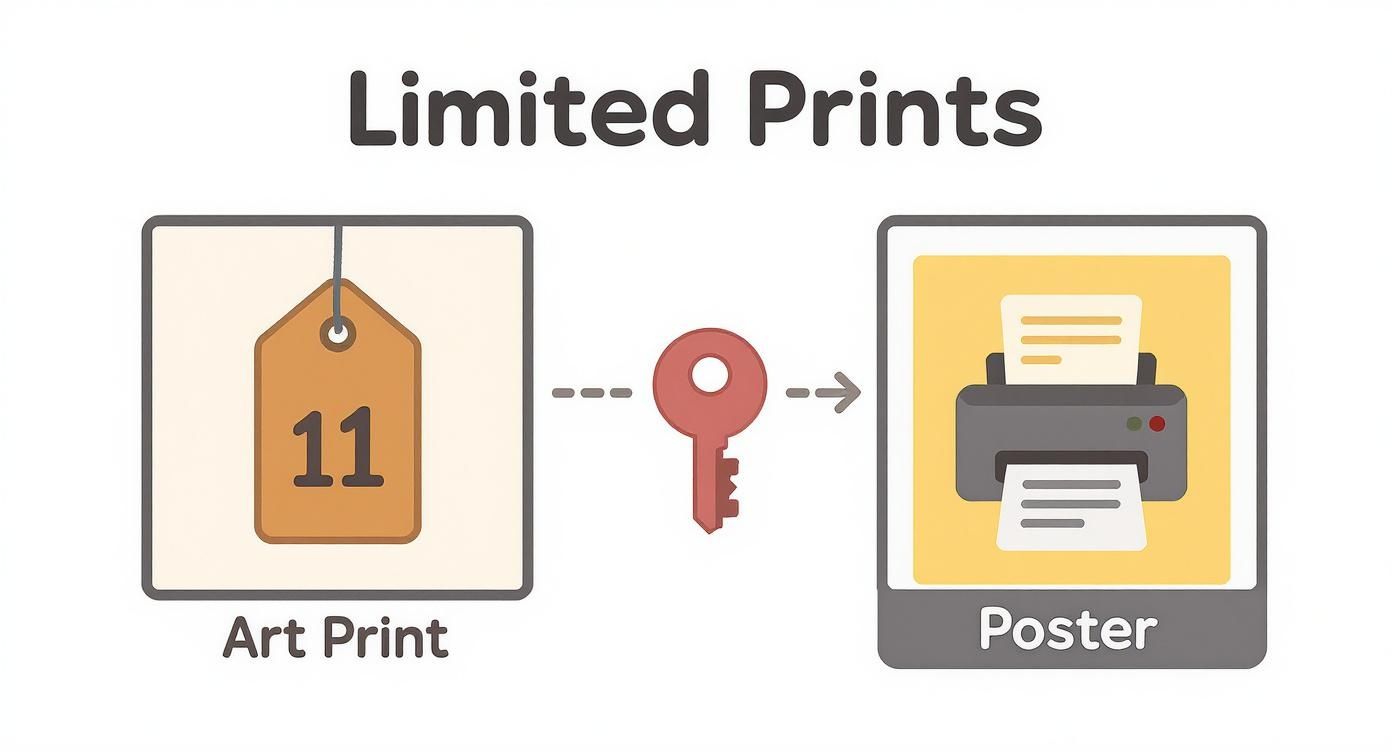
As you can see, scarcity is the game-changer. It’s what elevates a great image into a collectible treasure.
Understanding the Holy Grail: Proofs
Every now and then, you might see letters instead of numbers, like 'AP' or 'PP'. This is where things get really interesting for serious collectors. These are proofs—essentially, the test prints made before the main edition is run.
Artist’s Proof (AP): These are traditionally kept by the artist for their personal collection or to sell separately. They are identical in quality to the main edition but exist outside the numbered run, making them exceptionally rare.
Printer’s Proof (PP): These are given to the master printer who helped produce the work. Much like APs, they are a nod to the collaboration and are highly sought after.
Because there are far fewer proofs than numbered prints, they are often seen as the most coveted versions. Owning an 'AP' is like getting your hands on the band’s original demo tape—it’s a piece of the creative process that very few people ever get to see, let alone own.
The market for these unique pieces is growing stronger every year. The UK prints scene has seen a massive shift, with 75% of galleries at the prestigious London Original Print Fair now focusing on contemporary work over Old Masters. This highlights a huge appetite from collectors for fresh, modern limited edition prints. You can read more about the thriving contemporary print market and see how tastes are evolving. By understanding these markings, you can confidently appreciate the story and value behind every single piece in your collection.
Why Prints Are a Great Investment
So, you’ve got your eye on a print of David Bowie looking majestic, or maybe a piece capturing that impossible Zidane volley. Is buying it just about sticking something cool on your wall? Absolutely. But it’s also so much more than that.
Think of it less like a simple decoration and more like buying a vintage football shirt or a rare first-edition book. It’s a potential investment that can grow in value over time. This isn’t about playing the stock market with art; it’s about owning a slice of culture that means something to you and, as it turns out, might mean a lot to someone else down the line. You’re not just buying a picture—you’re buying a story, a memory, and a piece of history captured in a deliberately scarce format. Let's break down what turns a brilliant print into a savvy investment.
The Artist and Subject Matter Matter
First things first: who created the print, and what is it of? An artist with a growing reputation or a well-established name will always add value. But in our world of music and football, the subject is just as crucial. A print celebrating a legendary goal, a classic album cover, or an iconic festival performance has built-in cultural significance.
These are moments etched into our collective memory. Think about it:
- A print of the Stone Roses at Spike Island isn’t just a picture of a band; it’s a symbol of a generation.
- An artistic take on Maradona's "Hand of God" is more than a football moment; it’s a piece of sporting folklore.
When the subject has that kind of iconic status, the print becomes a tangible piece of that legacy. It's an asset that taps into nostalgia and passion, two very powerful drivers of value.
Scarcity Drives Desirability
As we've touched on, the edition size is everything. A print from a run of just 25 is inherently more valuable than one from a run of 500. It's basic supply and demand—the fewer there are, the more people will want one. Once an edition sells out, the only way to get your hands on one is on the secondary market, which is where prices can really start to climb.
This concept isn't unique to art. To get a feel for the bigger picture, you can find great insight in articles discussing the appeal of limited edition items in other worlds like fashion. The principle is the same: owning something that not everyone can have makes it more special and, often, more valuable.
Owning a limited edition print is about combining your passion with a smart purchase. It’s a way to invest in the cultural moments you love, creating a collection that not only makes you smile but also has the potential to become a significant asset over time.
Condition Is King
Finally, just like with any collectible—whether it’s a vinyl record or a comic book—the condition of your print is paramount. A print that has been properly cared for, kept out of direct sunlight, and professionally framed will hold its value far better than one that’s been carelessly tacked to the wall.
Think of it as keeping your classic trainers in the box. A pristine print, free from fading, creases, or damage, is exactly what serious collectors look for. It proves the piece has been treasured and respected, which is a huge factor in determining its long-term investment potential. By taking good care of your art, you’re not just preserving a memory; you’re protecting your investment for the future.
How to Buy Prints with Confidence
Alright, let's be honest. Diving into the art world can feel a bit like trying to understand the VAR offside lines after a few pints – confusing, slightly intimidating, and you’re never quite sure if you’re getting the right decision. But fear not. Buying limited edition prints doesn’t have to be daunting.
We’ve got your back with a practical playbook for buying with confidence, ensuring you don’t end up with a piece that’s about as authentic as a referee’s apology after a shocking decision.

Authentication: The Official Review
First things first, let's talk about the single most important document in your print-buying journey: the Certificate of Authenticity (COA). Think of this as the official VAR check for your art. It’s a signed contract from the artist or publisher that confirms your print is the real deal, not some knock-off.
A proper COA is your proof of provenance. It should include all the crucial details that validate the print’s legitimacy and value.
- Artist’s Name: Obvious, but essential.
- Title of the Work: The official name of the print.
- Edition Details: This must state the total edition size (e.g., 50) and the specific number of your print (e.g., 12/50).
- Printing Date: The year the edition was produced.
- Medium and Paper: Information on the printing technique and the high-quality archival paper used.
Without a COA, you’re essentially buying on blind faith. It’s the difference between a signed, match-worn shirt and one you bought from a bloke down the pub. Always insist on one.
Where to Find the Real Deal
So, where do you actually go to find these genuine treasures? The good news is, you've got options. Sticking to reputable sources is the key to avoiding fakes and dodgy dealers, and your best bets are usually the most direct routes.
An artist’s own website or official online store is a fantastic starting point. This way, you’re buying directly from the source—no middlemen, no questions about authenticity. Reputable art galleries and established online marketplaces also offer a curated selection and a guarantee of quality.
The market for accessible, high-quality prints has exploded, making it easier than ever to start a collection. In fact, UK sales of limited edition prints under £4,000 have surged by 79% in recent years, with a whopping 56% of buyers using online platforms to discover and purchase art. This shift shows just how many people are getting into collecting, and you can discover more insights about art market trends that are making art more accessible.
Red Flags to Watch For
Just like a dodgy transfer rumour, some deals are simply too good to be true. To keep you from scoring an own goal, here's a quick checklist of red flags to look out for when you're on the hunt for your next piece of wall art.
Think of this as your pre-match team talk. Knowing what to avoid is just as important as knowing what to look for. A bit of caution now can save you a lot of disappointment later.
- No Certificate of Authenticity: We’ve said it once, but it bears repeating. No COA? It’s a major red flag. Just walk away.
- Vague or Missing Details: If the seller is cagey about the edition size, paper type, or printing process, be suspicious. Transparency is a sign of a professional.
- Suspiciously Low Prices: If a print by a popular artist is being sold for a fraction of its usual price, there’s probably a reason. It’s almost certainly a cheap reproduction, not a genuine limited edition.
- Poor Quality Photos: A reputable seller will provide high-resolution images that show the print’s details, including the signature and edition number. Blurry or generic photos are a definite warning sign.
By keeping these points in mind, you can navigate the art market with the confidence of a seasoned pro, making sure every piece you add to your collection is a certified winner.
Caring for Your Art Collection
Right, you’ve done it. You’ve brought home a piece of art that truly speaks to you. Maybe it’s a tribute to your football club’s finest hour or an image that perfectly captures the swagger of your favourite frontman. The temptation is to just slap it on the wall with the nearest bit of Blu Tack and admire your handiwork.
But hold on a moment.
Treating your new limited edition print like a takeaway menu you’re pinning to the fridge is a cardinal sin in the art world. This isn’t just a picture; it’s an investment, a slice of cultural history, and potentially a future heirloom. Giving it a bit of proper care now will ensure it stays as vibrant and brilliant as the day you first unrolled it.
The Framing Game
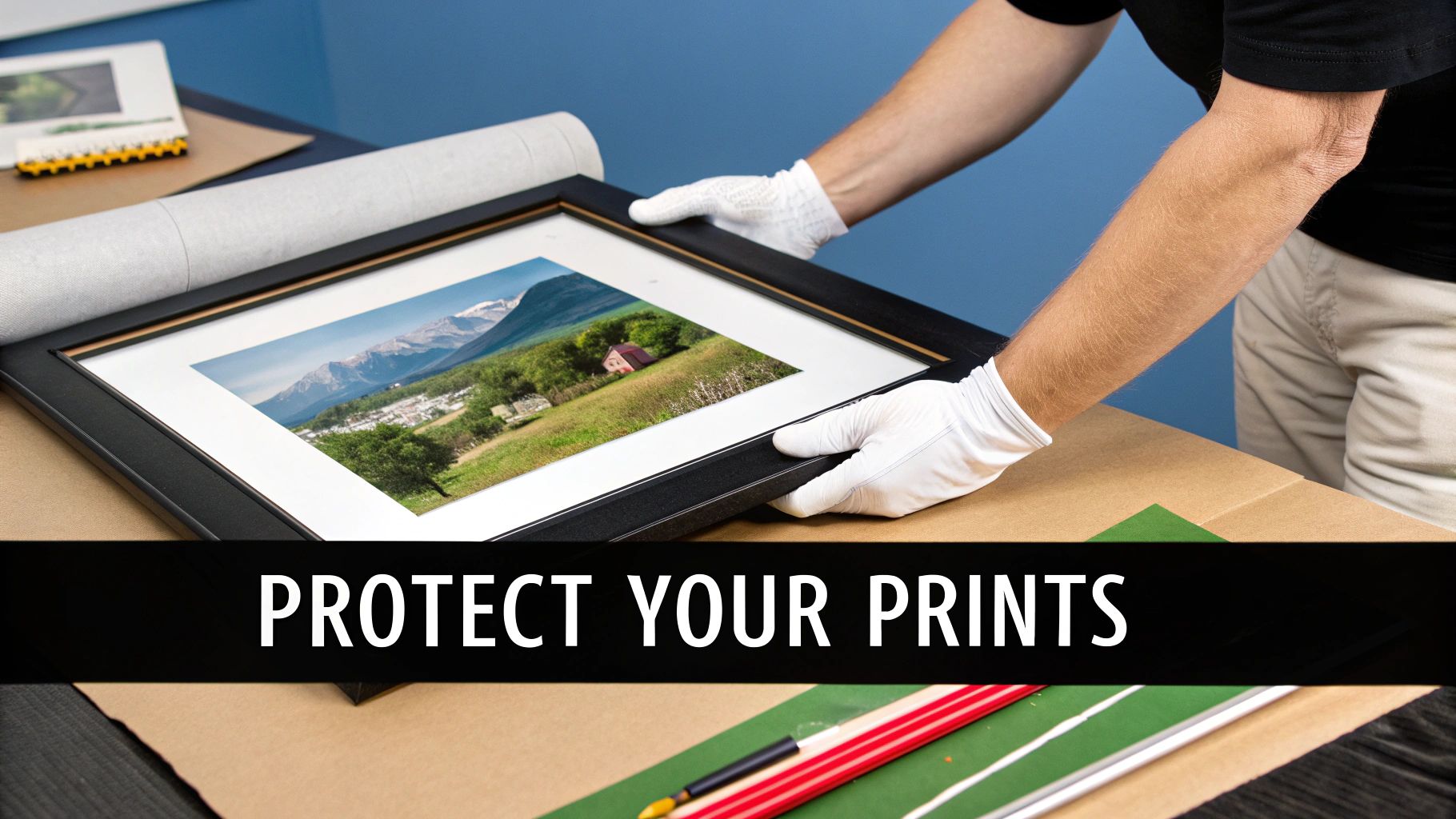
First things first: framing. This isn’t just about making your print look good; it’s the single most important step in protecting it. Think of it as a top-class defender, shielding your star player from knocks, scrapes, and environmental threats. A quality frame does so much more than just hold the print up.
- Structural Support: It stops the paper from bending, creasing, or tearing over time.
- A Protective Barrier: The glass or acrylic glazing protects the print’s delicate surface from dust, fingerprints, and accidental splashes (we’ve all been there during a tense match).
- Enhanced Aesthetics: The right frame doesn't just protect, it elevates. It complements the artwork, transforming it from a cool print into a stunning centrepiece for any room.
Getting it framed professionally is always your best bet, but if you fancy a bit of DIY, using the right, acid-free materials is non-negotiable. For a complete rundown, check out our guide on how to frame posters and prints properly. It's your playbook for getting it spot on.
Location, Location, Location
Now that it's beautifully framed, where should you hang this masterpiece? Choosing the right spot is like a manager picking his starting eleven—it requires a bit of tactical thinking. The two biggest enemies of any print are direct sunlight and moisture.
Sunlight is the equivalent of a two-footed tackle on your print's colours. Its UV rays will cause the vibrant inks to fade faster than a one-hit-wonder's career. Always choose a wall that doesn't get blasted by direct sun for hours on end.
Equally, avoid hanging artwork in places with high humidity, like directly above a radiator, in a steamy kitchen, or a damp conservatory. Moisture in the air can cause the paper to warp or even encourage mould growth over time. The best place is always a cool, dry spot where your print can live its best life.
Think of your print like a rare vinyl record. You wouldn't leave it on the dashboard of your car on a sunny day, would you? Give your art the same respect, and it will reward you by looking fantastic for decades.
Caring for your art is all part of the joy of collecting. It’s a growing scene, with the UK art market seeing total sales of around $10.4 billion. Within that, the market for more accessible pieces like limited edition prints is booming, with values for art under $5,000 increasing by 7%. This shows a huge appetite among new collectors for art that’s both brilliant and attainable. You can read the full Art Basel report on the global art market to see the trends for yourself.
By following these simple steps, you're not just decorating your home; you’re protecting a valuable piece of that exciting market.
Starting Your Collection of Cool Wall Art
So, are you ready to start building a collection that’s less about stuffy art galleries and more about what gives you that proper, hairs-on-the-back-of-your-neck feeling? We’re talking about art that celebrates the moments that really matter—that last-minute screamer that clinched the title, the festival set that completely blew your mind, or an iconic film scene you can quote forwards and backwards. This is where your walls stop being just walls and start telling your story.
Here at Striped Circle, we’re not just selling pictures. We’re massive fans first. Every single piece we create is born from a genuine, nerdy love for the subject. Whether it’s a tribute to a midfield maestro or the lyrical genius of a Manchester band, you can bet we’ve argued about it over a brew long before it gets anywhere near a printer.
More Than Just a Pretty Picture
That passion is baked into everything we do. We properly obsess over the quality, making sure each print feels as premium as it looks. We use top-notch paper, vibrant inks, and the attention to detail is meticulous. Think of it like the difference between a dodgy market-stall T-shirt and the official club kit—you can just feel the quality.
We collaborate with incredibly talented artists who are on our wavelength, working together to create limited editions prints you simply won’t find anywhere else. Each edition is carefully considered and produced with the respect it deserves, making every piece a genuine collector's item from day one.
Curating Your Personal Hall of Fame
At the end of the day, our goal is simple: to help you build a collection of conversation starters. When your mates come round, we want them pointing at your wall and saying, "Oh, I remember that goal!" or "What a tune that is!" It’s about surrounding yourself with things that bring a smile to your face every time you walk past them.
Your home or office should be a gallery of what you love. It’s not about following trends; it’s about celebrating your heroes, your memories, and the cultural touchstones that make you, you. It’s about turning a blank space into a personal hall of fame.
Think of each print as a tangible piece of your personal history—a visual playlist of your favourite moments in sport, music, and film. This isn’t just about filling a space; it’s about filling it with joy, nostalgia, and a bit of personality. That’s what cool wall art is truly all about.
Your Questions About Prints Answered
Right then, time for a quick-fire round. We get a lot of the same questions about collecting limited edition prints, so we've put together a no-nonsense FAQ section to tackle the queries everyone thinks but might be too polite to ask. Consider this the half-time team talk to get you fully clued up.
Are Limited Edition Prints Just Overpriced Posters?
Absolutely not. That’s like saying a vintage Subbuteo set is just overpriced plastic. A poster is mass-produced with no limit, whereas a limited edition print is a high-quality, collectible piece of art with a deliberately restricted run.
The value is in the scarcity, the quality of the archival materials, and the artist's direct involvement—usually through a signature. It's a different beast entirely.
What’s the Best Number to Get in an Edition?
Honestly, from a value perspective, it doesn’t really matter. Whether you have print number 2/50 or 49/50, it’s still one of only fifty in existence.
Some collectors have a soft spot for number 1 or the final number in the edition, but it’s mostly personal preference. If you’re a football fan, maybe you’ll want number 7 for Cantona or number 8 for Gerrard—it’s entirely up to you.
Can I Just Print My Own Version at Home?
You could, but it would be the equivalent of recording a song off the radio onto a cassette tape. It’s never going to be the real deal. A genuine print is made using professional-grade archival inks and papers designed to last for over 85 years without fading.
Your home printer, bless its cotton socks, just can’t compete on quality, longevity, or, most importantly, authenticity.
A true limited edition print is a performance, not just a copy. The artist often tweaks the brightness, contrast, and colour balance specifically for printing to ensure it looks perfect on paper, not just on a backlit screen.
Do Artist Proofs Cost More?
Generally, yes. Artist's Proofs (APs) are rarer than the numbered prints in the main edition, often making up only 10-15% of the total run size. Because they are the prints traditionally kept by the artist, they have an extra layer of exclusivity.
Think of them as the rare B-side on a classic vinyl single—often just as good, but much harder to find, which makes them more desirable for serious collectors.
What If I Don’t Like Framing?
We get it, framing can feel like a bit of a faff. But it’s non-negotiable if you want to protect your print. Leaving a print unframed is like leaving your favourite vinyl record out of its sleeve—it’s just asking for trouble.
Dust, moisture, and sunlight are the arch-enemies of art, and a decent frame is the only defensive line that will keep them at bay and ensure your print looks mint for years to come.
Ready to start building a collection that celebrates your heroes? Striped Circle has a massive range of prints inspired by the beautiful game and iconic music. Find a piece that makes you smile today.
