
Album Cover Frames That Make Your Walls Look Legendary
Album cover frames are the perfect way to display your favourite vinyl LPs and singles, turning those cherished record sleeves into genuine wall art. They do more than just look good; they protect your albums from dust and damage while transforming your space with a personal touch that screams your taste in music.
Your Records Deserve Better Than a Dusty Corner
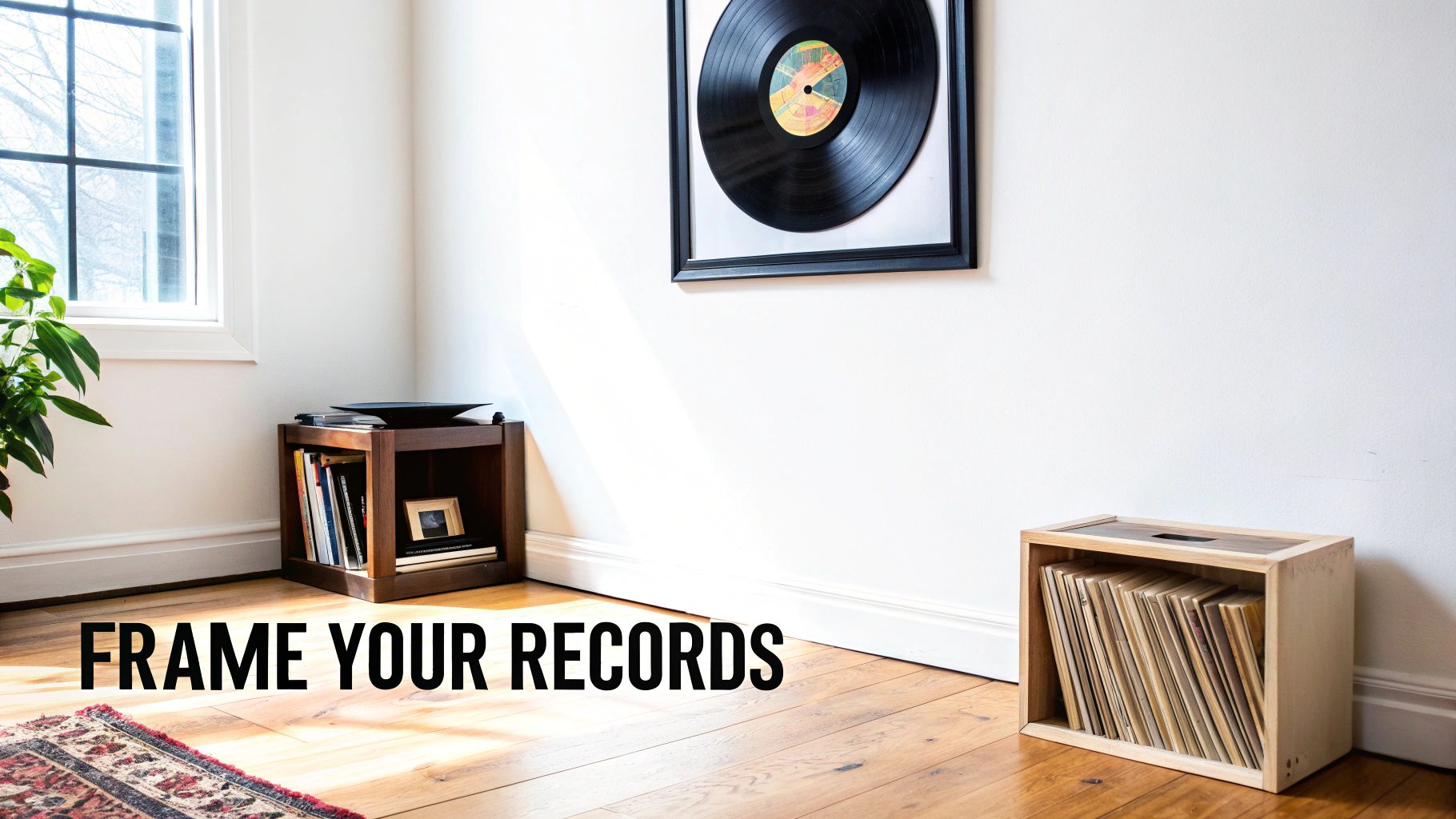
Let's have an honest chat. That pristine, first-press copy of Definitely Maybe you treasure isn't doing anyone any favours tucked away in a dusty old crate. It’s a piece of art, a memory, and a statement all rolled into one. It’s the soundtrack to late-night drives, pre-match pints, and a few questionable life choices. So why on earth is it hidden from view like a Premier League club's dodgy finances?
We’ve all been there. The student-house days of sticking posters to the wall with Blu Tack, only for them to peel off and take a chunk of paint with them. Or worse, the sad, curling corners of a poster held up with yellowing tape, silently weeping for a better life. It’s a tragic sight, and frankly, your walls—and your records—deserve so much more. This is about elevating your space from just "a room where you sleep" to a personal gallery that is unmistakably you.
Turning Passion into a Masterpiece
Framing your favourite album covers goes way beyond simple decoration. It’s a way to celebrate the music that actually defines you. Think about it: that sleeve art was meticulously designed to be seen, to capture the whole vibe of the tunes within. This is your chance to pay proper homage to the legends.
Your home should be a reflection of who you are and what you love. Displaying your favourite album covers is one of the coolest and most personal ways to bring your walls to life, turning nostalgia and passion into a focal point.
It’s about turning your passion for music into a display that not only looks brilliant but also serves a practical purpose. A proper frame protects your cherished sleeves from grubby fingerprints, fading from sunlight, and the inevitable drink spillage during a get-together.
More Than Just Music
And this isn't just about the Stone Roses or The Smiths. The same principle applies to everything that gives you that buzz. Imagine framing:
- Your Favourite Football Chants: Bold lyric prints from the terraces, capturing the raw, unfiltered energy of a match day.
- Iconic Movie Quotes: Those lines you and your mates recite endlessly, finally given the artistic treatment they deserve.
- Legendary Gig Posters: That epic festival you went to, immortalised and looking sharp on your wall for years to come.
Ultimately, choosing the right album cover frames is the first step in creating a space that makes you smile every time you walk into it. It’s about curating a collection that tells your story, one record—and one memory—at a time. Your walls are a blank canvas, so let's make them sing.
Choosing the Right Frame Without the Headache
Right then, you’ve decided to give your albums the glory they deserve. Top choice. But now you’re staring at a seemingly endless scroll of online options—wood, metal, black, white, with a mount, without a mount... It’s enough to make you ditch the whole idea and head straight to the pub.
Don’t you dare. Picking the perfect frame isn't rocket science; it's about matching the frame's vibe to the album's personality. Think of it like a band's lineup—every member has to complement the others to create a banger. You've got to find that perfect harmony between the frame, the mount, and the artwork itself.
Material World: What’s Your Style?
First up, the material. This choice says a lot about your overall aesthetic. There's no right or wrong answer here, just what feels right for your space and the specific album you're framing.
- Sleek Metal Frames: Think modern, sharp, and clean. An aluminium frame, especially in black or silver, is brilliant for contemporary album art. Imagine Kraftwerk’s The Man-Machine or Daft Punk’s Discovery. The minimalist style lets the bold graphics do all the talking.
- Classic Wood Frames: Wood brings warmth and a more traditional, organic feel. A light oak could be perfect for a folksy masterpiece like Nick Drake’s Pink Moon, while a darker walnut might suit the moody, timeless feel of Joy Division’s Unknown Pleasures.
While selecting the perfect frame can be a puzzle, the principles of choosing the right item for your space apply widely. For instance, you'll find similar considerations in these tips for choosing the right cover for your living room furniture. This commitment to personalising our spaces is bigger than ever.
In the United Kingdom, the picture frame market is booming. It's projected to grow at a compound annual growth rate (CAGR) of 3.6% from 2022 to 2030. This growth is driven by a surging demand for framing personal artwork in homes, reflecting a cultural shift that saw businesses like ours launch during lockdown to meet that very need.
To Mount or Not to Mount
This is the great debate, the Oasis vs. Blur of the framing world. Do you go for a mount (that card border between the frame and the sleeve) or let the album art go right to the edge?
A mount gives your artwork breathing space. It draws the eye inward, creating a more professional, gallery-style finish that makes the album cover the undisputed star of the show.
A crisp white mount can make the colours on an album like The Beatles' Sgt. Pepper's absolutely explode. It just adds a layer of sophistication and helps separate the art from its surroundings.
On the other hand, going 'full-bleed' (no mount) delivers a bold, in-your-face impact. It's a more direct and modern approach that works brilliantly for artwork with a strong, simple design. Think of the raw power of The Clash's London Calling—a full-bleed frame keeps that gritty, immediate energy intact. The choice is yours, but for more guidance, check out our deep dive on how to frame posters and prints, as many of the same rules apply.
Getting the Sizing Spot On for Your Vinyl
Let's get this right from the start. We've all been there: you order a frame, wait excitedly for it to arrive, and then... it doesn't fit. The disappointment of finding your prized album sleeve is either swimming in a frame that's too big or, even worse, won't squeeze in at all is something we want to avoid. Measure twice, hang once.
Before you even think about reaching for the tape measure, it’s worth remembering a few key details. The standard vinyl LP comes in a 12-inch sleeve, but in reality, that sleeve is usually closer to 12.375 inches square. That small fraction of an inch makes all the difference. The same goes for a 7-inch single; it’s rarely a perfect 7 inches.
Older pressings, international releases, and special editions can all have slight variations. And that's before we even get to the fun stuff like gatefold sleeves, box sets with chunky booklets, or those brilliantly weird shaped records from the 80s. These all need a bit more consideration than a standard off-the-shelf solution.
This handy flowchart breaks down the main decisions you'll be making.
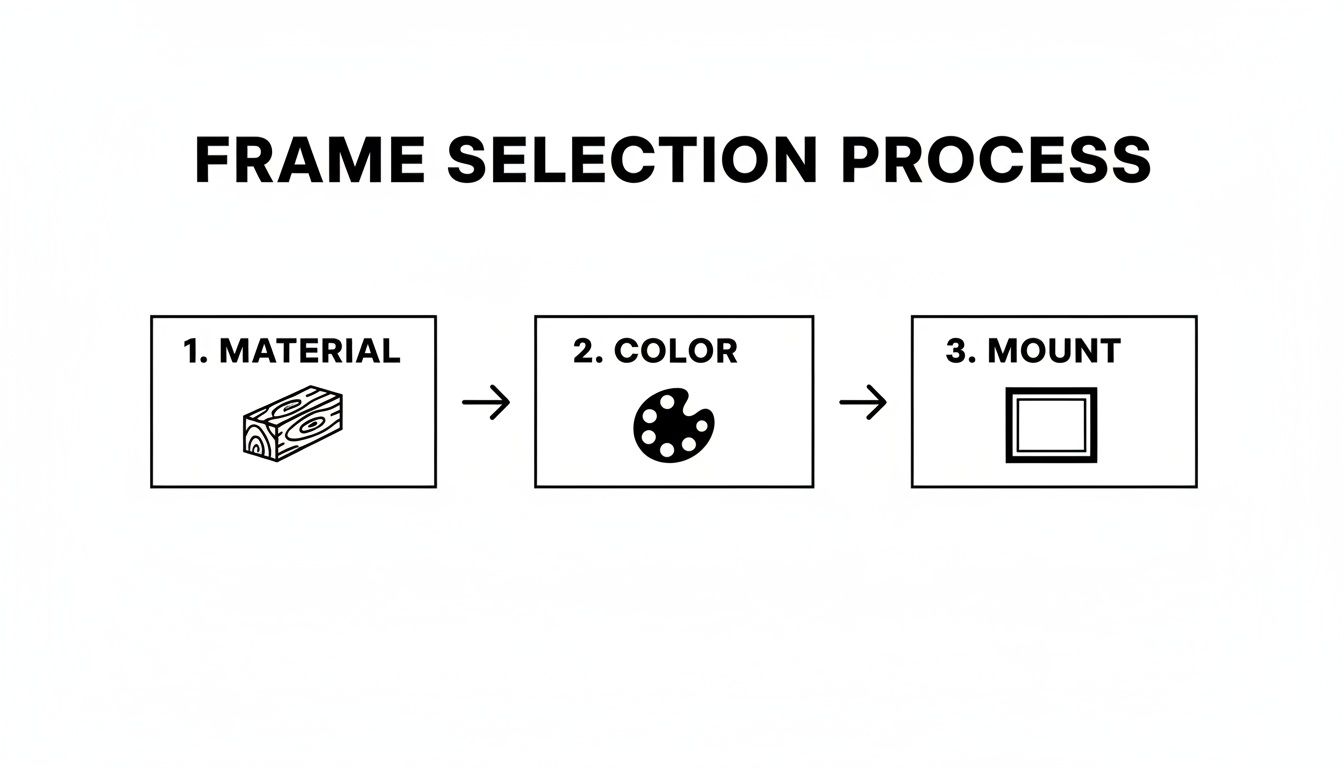
As you can see, the process is about balancing the material, the colour, and the mount to find that perfect combination for your specific piece of vinyl art.
The No-Fuss Vinyl Size and Frame Guide
To make life easier, here’s a quick reference table I’ve put together from years of framing these things. It covers the most common vinyl sizes and gives you the exact frame and mount dimensions you should be looking for.
| Vinyl Type | Sleeve Dimensions (Inches) | Recommended Frame Size | Recommended Mount Aperture |
|---|---|---|---|
| 7" Single | 7.25" x 7.25" | 10" x 10" or 12" x 12" | 6.75" x 6.75" |
| 12" LP | 12.375" x 12.375" | 16" x 16" or 50cm x 50cm | 11.75" x 11.75" |
| Gatefold (Open) | 12.375" x 24.75" | 16" x 28" or custom | 11.75" x 24.25" |
Bookmark this page or jot these numbers down. Having them on hand when you're shopping will save you a world of trouble and ensure you get that professional, gallery-quality look every time.
Decoding the Framer's Jargon
When you start looking at frames online, you'll come across a few terms that can seem confusing. They're actually very simple, and understanding them is crucial to getting the fit just right.
- Aperture Size: This is the big one. It's the precise size of the opening in the mount (the card border that surrounds the artwork). You want the aperture to be slightly smaller than your album sleeve. This creates a neat little overlap, holding the sleeve in place and ensuring it doesn't fall right through.
- Rebate Size: This refers to the inner dimension of the frame itself—the space where the glass, mount, and backing board all sit together. The rebate needs to be slightly larger than your sleeve and mount, giving all the components a bit of room to sit comfortably without buckling.
Think of it like this: your album sleeve is the footballer, the mount aperture is their shirt, and the frame's rebate is the entire stadium. The shirt needs to be a snug fit, but the player still needs a bit of room on the pitch to move.
Getting these dimensions right is what separates an amateur display from one that looks sharp and intentional. While we're talking about vinyl here, the principles are the same for most prints. For a deeper dive, check out our guide on what size poster frame you need, as it covers these concepts in more detail.
How to Create a Wall That Actually Rocks
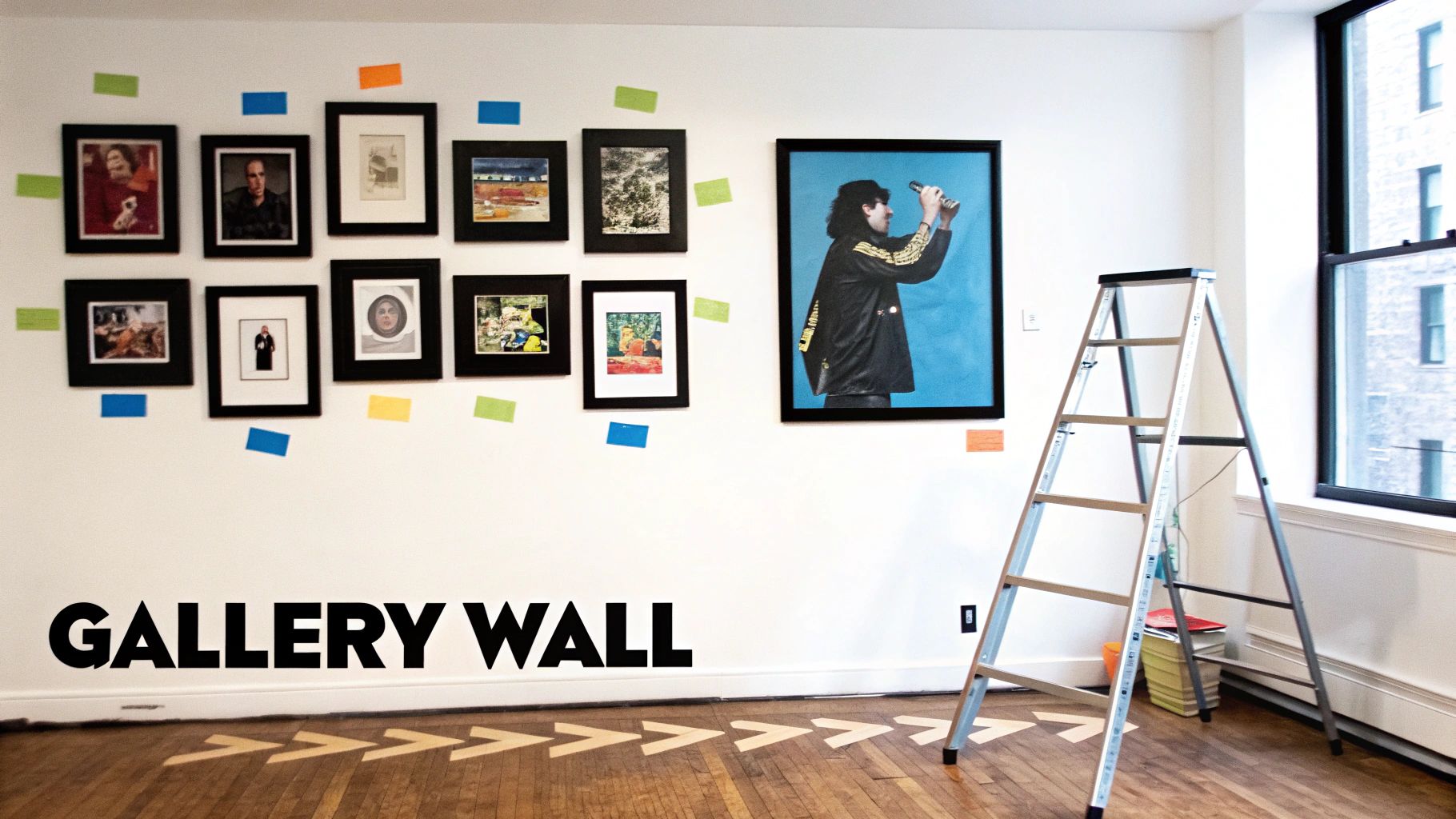
So, one framed album on the wall makes a solid statement. But a whole wall of them? That's not just a display; it's the headline act. This is your creative playbook for arranging your album cover frames into a gallery that feels less like a dentist’s waiting room and more like backstage at Glastonbury.
Let's forget everything you think you know about hanging pictures. We're not always aiming for boring, perfectly symmetrical lines (unless that’s your jam, of course). The real goal is to create a wall that tells a story, sparks a conversation, and makes you grin every single time you see it.
The good news is, you're not alone in wanting to plaster your walls with things you love. The UK wall art market is absolutely massive, generating a whopping USD 3,597.2 million in 2022. It's on track to hit over USD 5.5 billion by 2030, which just goes to show how much we all value having unique, personal art on our walls. You can read the full analysis on the UK wall art market trends to get the full picture.
Planning Your Layout Without Losing Your Mind
Before a single nail even thinks about meeting your wall, you need a plan. Trust me on this one. The best trick in the book is to use paper cutouts. Grab some old newspaper or wrapping paper, trace your frames, cut out the shapes, and use a bit of masking tape to stick them on the wall.
This is a complete game-changer. It lets you move everything around, swap positions, and live with the layout for a day or two before committing. You get to visualise the final result without turning your wall into Swiss cheese.
Finding Your Theme
The best gallery walls have a vibe—a connecting thread that ties it all together. You don’t have to be rigid, but having a theme can elevate your display from a random collection to a curated masterpiece.
- Genre Dedication: Got a soft spot for 90s Britpop? Create a wall dedicated to the Gallagher brothers, Blur, and Pulp. It’s an instant nostalgia trip.
- A Band's Journey: Tell the story of your favourite band’s evolution. Imagine lining up every studio album from The Smiths, from their raw debut to Strangeways, Here We Come.
- Colour Coordinated Chaos: Pick a dominant colour and just run with it. A wall of just black-and-white covers—Joy Division, The Clash, a bit of AC/DC—is a bold look that always works.
The best walls are the ones that break the rules a little. Don't be afraid to mix your album cover frames with other prints. Throw in a lyric print of your favourite terrace chant, a cool football poster, or even a random piece of art that just feels right.
For more inspiration on arranging framed items, these bedroom wall decoration ideas are full of great advice, as the principles of good layout apply to any room.
Ultimately, this is all about creating something that's 100% you. Our guide on how to arrange wall art dives even deeper into layouts and tips. So get planning, have fun with it, and build yourself a wall that truly rocks.
Keeping Your Prized Collection Looking Mint
You’ve invested time, money, and probably a few late nights on eBay to build your collection. The last thing you want is for that signed copy of (What's the Story) Morning Glory? to fade faster than a one-hit-wonder from the early noughties. This is where we need to talk about preservation, but I promise it's not as dull as it sounds.
Think of it as insurance for your memories. You wouldn’t leave a pair of vintage Adidas Gazelles out in the rain, would you? The same logic applies here. The biggest enemy of your prints, posters, and album sleeves is that massive ball of fire in the sky: the sun.
Dodging the Dreaded Fade
Sunlight, or more specifically, the ultraviolet (UV) rays it pumps out, is an absolute menace to the colours in your artwork. Over time, it mercilessly breaks down the inks on an album sleeve, leaving what was once a vibrant piece of art looking like a washed-out tea towel. This is especially gutting for rare or signed pieces that are essentially irreplaceable.
That’s why UV-protective glass (or its acrylic equivalent) is worth every single quid. It acts like a bouncer for your artwork, blocking out over 90% of harmful UV rays while still giving you a crystal-clear view. For anything you truly value, this is non-negotiable.
Keeping It Acid-Free
There’s another silent killer lurking in cheap frames: acid. No, not the kind that inspired some of the trippier 60s album art. I’m talking about the acid found in low-quality paper and cardboard used for mounts and backing boards.
This acid slowly leeches into your album sleeve, causing that horrible yellowing effect and making the paper brittle over the years. It's a slow-burn tragedy. To sidestep this disaster, always look for album cover frames that are specifically labelled as using acid-free or archival-quality materials. It’s the difference between your prized possession looking mint for decades and looking like it was used as a beer mat in a dodgy pub.
Simple Upkeep for Lasting Glory
Once your art is safely tucked behind UV glass and supported by an acid-free board, the hard work is done. From here on, maintenance is a complete doddle.
-
Dusting Duty: A gentle wipe with a soft, dry microfibre cloth every now and then is all it takes. Just be sure not to spray cleaning fluid directly onto the glass or acrylic, as it can seep behind the frame and cause damage. Spray it onto the cloth first.
-
Location, Location, Location: Even with UV protection, it's still smart to avoid hanging your frames in direct, intense sunlight all day. Think of it as giving them a bit of shade to relax in.
-
Avoid Moisture: This one’s a no-brainer, but keep your frames away from bathrooms or kitchens. Steam and humidity can cause warping or, even worse, mould. Nobody wants a soggy Slippery When Wet sleeve.
Stick to these simple rules, and your collection will stay looking sharp enough to make your mates jealous for years to come.
Got Questions About Framing Album Covers? We've Got Answers
Right, let's get into some of the common questions that pop up when you're about to turn your record collection into a gallery wall. You've got the vision, but a few details might be holding you back. No problem, here are some straight-up answers to get you on your way.
Can I Frame the Actual Vinyl Record Along With the Sleeve?
This is probably the number one question we get asked. The short answer is yes, you can. You'll find special ‘3D’ or deep ‘box’ frames out there made for this exact purpose, and they can look absolutely fantastic.
However, it’s a bit of a contentious issue among vinyl lovers. Most collectors (and honestly, we’re with them on this) believe records are meant to be played, not just displayed. Keeping the vinyl pressed against glass for years isn't the best thing for its condition, either.
Our take? Frame the sleeve – that’s the artwork you fell for in the first place. Keep the record itself safe in a poly-lined inner sleeve, ready for its next spin. You get the best of both worlds: a stunning display and a playable record.
What's the Best Way to Hang Frames Without Making a Mess of My Walls?
If you're renting or just aren't keen on patching up holes later, adhesive picture hanging strips are an absolute game-changer. Don't be fooled by how simple they seem; the good quality ones are seriously strong and can easily handle the weight of a standard album frame.
Pro Tip: Always give the spot on the wall a quick wipe with a bit of rubbing alcohol before sticking them on. This gets rid of any dust or grease and helps the strips get a really solid grip. Trust us, it's a simple step that can prevent a crash in the middle of the night.
Just make sure you check the weight limit on the packet and follow the instructions precisely. For heavier album cover frames, or if you own your home and want something more permanent and secure, you can't go wrong with a traditional picture hook and nail.
Should I Go for Glass or Acrylic in My Frame?
Another great question, and it really comes down to a few key differences. Traditional glass has that classic, solid feel and is very easy to clean. The main drawback is its weight, and of course, the fact it shatters into a thousand sharp pieces if it takes a tumble. That's not ideal if you have kids, pets, or just clumsy mates.
This is where acrylic, often known by the brand name Perspex, really shines. It's incredibly lightweight, which makes hanging much easier and safer, plus it's shatter-resistant. Most importantly, high-quality acrylic usually comes with much better UV protection than standard glass, which is vital for preserving your album art.
The only real downside is that it can scratch more easily if you're not careful when cleaning it. For most situations, though, we reckon a good quality UV-filtering acrylic is the best choice. It gives your artwork better protection and is far safer to handle.
Ready to turn that pile of records into a wall of legends? Dive into the full range of music and football-inspired prints over at Striped Circle and find the perfect pieces to make your walls sing.
Take a look at the collection here: https://www.stripedcircle.com.
